
How to Treat Wrist and Forearm Pain with Dr. Tan's Balance Method: A Local Balance Case Study
What do you do when a whole meridian aches from the wrist to the elbow, but only one point on it is truly sharp? This case is about starting at that sharp point instead of chasing the length: let the most painful spot set the order, treat it first on the opposite side, then re-palpate and clear whatever still speaks.
A 42-year-old man comes to our clinic with wrist and forearm pain on the right side, after weeks of intensive work with machinery. It runs from the wrist up toward the elbow, with numbness in the little finger. He rates it 8 out of 10. Let's map it.
When pain runs the little-finger side of the arm and pools at the wrist, one meridian steps forward before the rest: the Small Intestine (SI). But a channel lit up along its whole length won't tell you where to begin. For that you stop reading the spread and press for the peak — the single point that outweighs the rest.
Patient Profile
| Age & work | 42-year-old male, works intensively with machinery |
| Complaint | Pain in the right hand and forearm, from the wrist to the elbow |
| Pattern | Along the Small Intestine meridian, with numbness in the little finger |
| Pain level | 8/10 |
| Context | Repetitive strain from daily manual work |
Why This Is an Ashi-First Case
The Small Intestine meridian lit up from SI 1 all the way to SI 8 — a long stretch running the little-finger side of the arm up toward the elbow. Here's the temptation: chase that whole painful line, a needle here, a needle there, following the pain wherever it shouts. It won't work. You will spend a dozen needles and dilute the effect across the length of a meridian that isn't the problem everywhere at once.
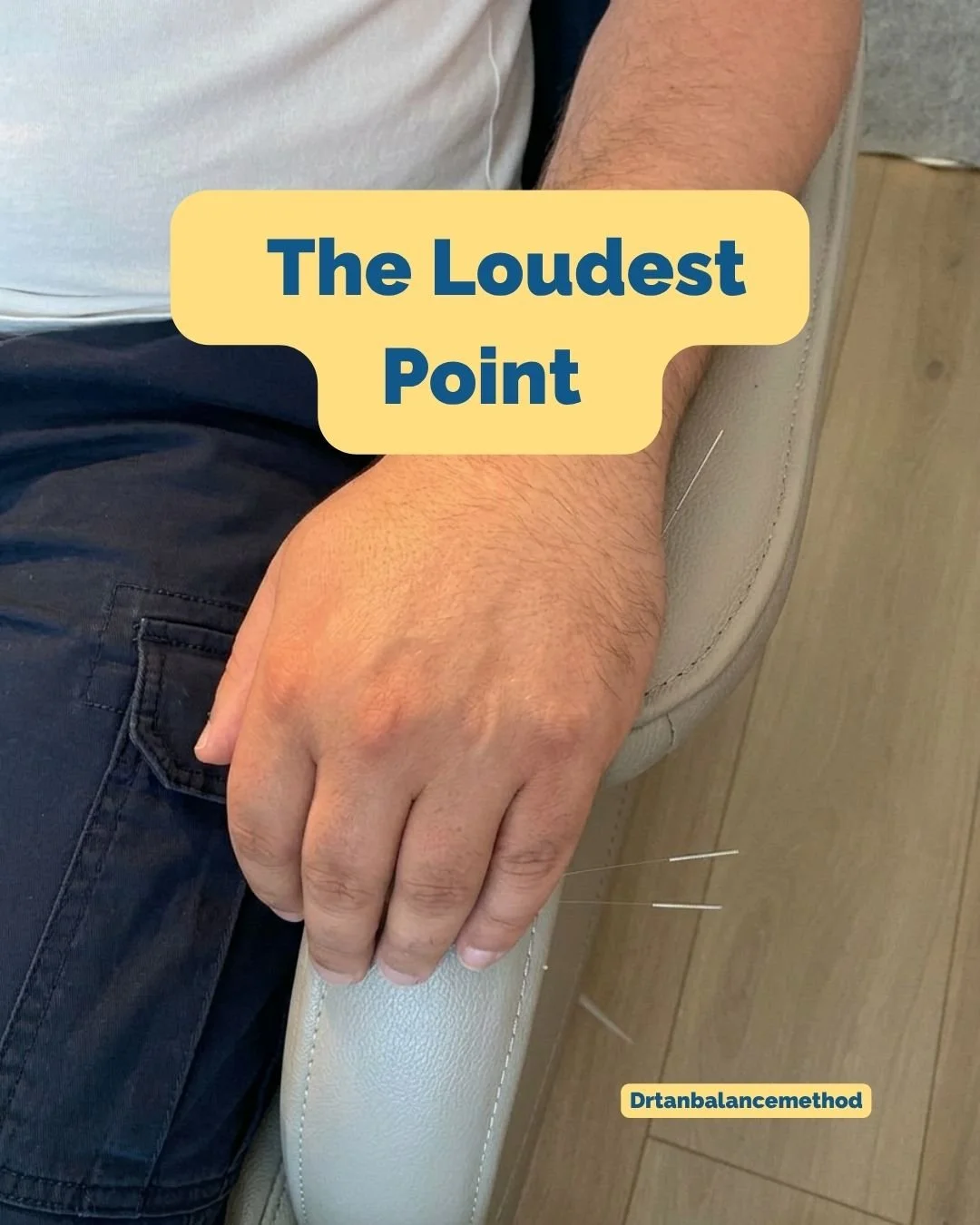
Somewhere on that line is a peak. In this case it was the tendon at SJ 4 (San Jiao), right at the wrist. Press it and he'd jump. The rest of the meridian ached; this one point was the peak. That's the point that tells you where to begin. Find the single most reactive spot, treat it first, and let the picture simplify from there. This is ashi-first thinking, and it keeps a wide, noisy case from turning into a pincushion.
Wrist and forearm pain like this is Local Balance territory.. Find the meridian. Find the most painful point. Treat the opposite side. Re-palpate, then finish what's left. That's the framework this case runs on.
The Treatment
Step 1: Map the pain
SI 1 to 8 — a clear stretch along the Small Intestine meridian, from the little finger up the forearm. But the sharpest point wasn't on that line at all. It was the tendon at SJ 4, right at the wrist. One meridian, one peak. That's the map.
Step 2: Pick the system
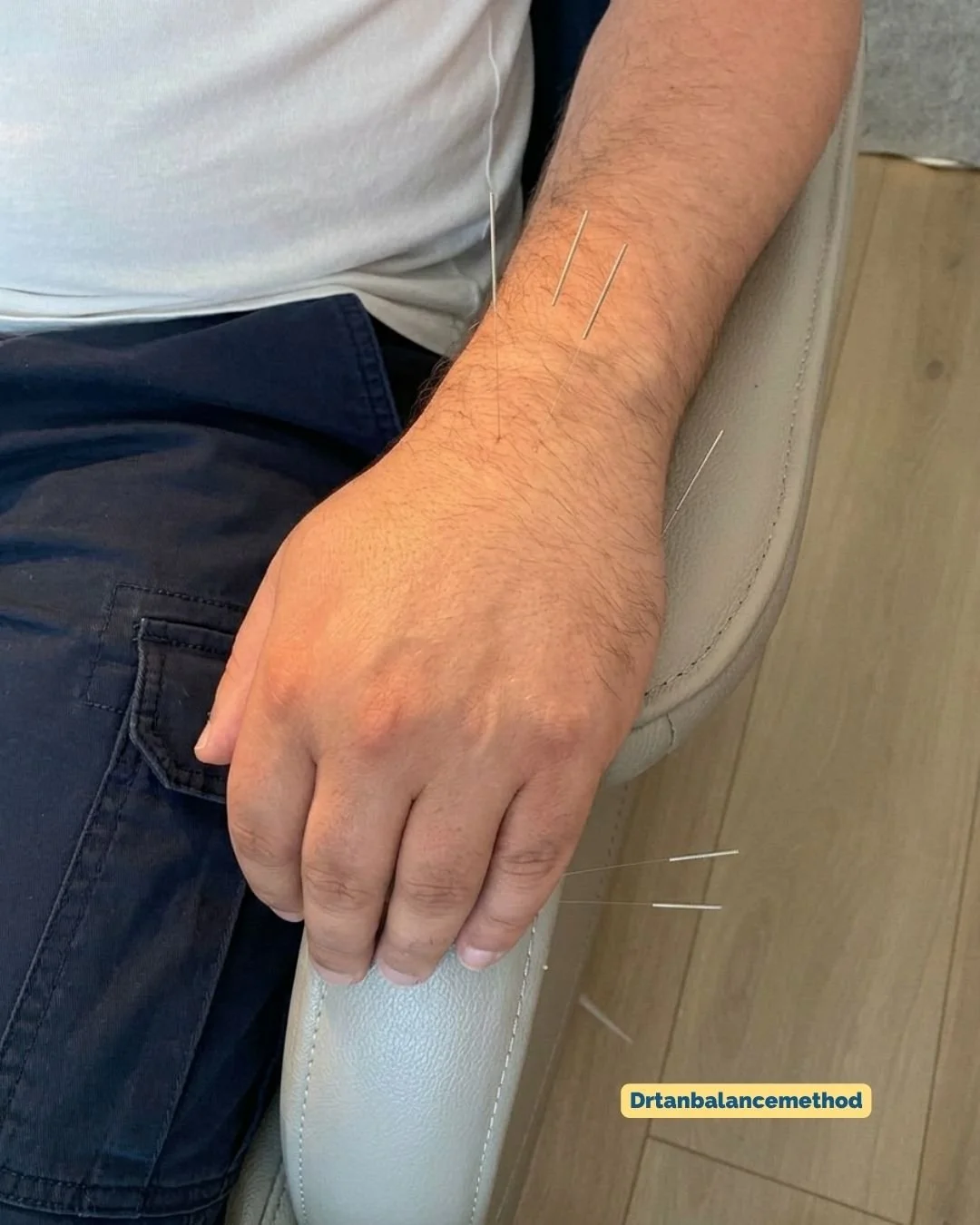
Local Balance, System 6. The complaint sat on the right, so we treated the opposite side — the left. System 6 gave us a perfect anatomical structural similarity: tendon for tendon, Small Intestine for Small Intestine. That match is the whole reason to pick it — the left arm mirrors the right at the same structural level, not just the same meridian name.
Step 3: Start at the most painful point
We palpated the tendon at SJ 4 first — the most sensitive spot of the whole picture. Three needles there, and most of the pain melted away. What remained ran along the Small Intestine line, from the top of the little finger down to SI 4. One threading needle from SI 3 to SI 4 handled that stretch. A little numbness and tingling lingered halfway down the little finger, so three more needles there, and it was gone.
Seven needles. By the end of that first session the pain was gone. One point at a time, starting with the sharpest.
Outcome
He came in for six sessions in total, starting at 8 out of 10 and reaching 0 out of 10 by the last one. Worth sitting with how those two facts relate: the pain cleared completely on the table in that first session, and it still took six sessions before that clearing held. Immediate relief and lasting resolution are two different results, and this case delivered them on two different timelines. For a man whose work loads the same tissue every day, it is the second one that counts.
The Insight: Start at the Peak, Not the Spread
A painful meridian has size and it has a peak. They are not the same thing. If we had let the size lead — that long, loud SI stretch from finger to elbow — we would have chased it up and down the arm and reached for many more needles. Instead, three needles on the single most painful point did most of the work. The threading needle and the little finger only cleaned up what was left.
Needle economy isn't a goal you aim at. It's a result of where you begin. Start at the peak, re-palpate, and most of the spread quiets down on its own. You don't treat the whole map. You treat the point that's most painful, then read what's still talking.
What to Watch For With Ashi-First Cases
1. Being led by the biggest area instead of the sharpest point
A meridian that hurts along its whole length feels like it needs treating along its whole length. It doesn't. Palpate for the peak first. The size of the painful area tells you which meridian; the peak tells you where to begin.
2. Adding needles before you re-palpate
After the first three needles, most of this case was already gone. If you keep needling on your original plan without re-checking, you treat pain that no longer exists. Needle the peak, then re-palpate. Let what remains tell you the next move.
3. Reading the leftover as failure
Once the loudest pain cleared, a quieter numbness in the little finger stayed behind. That isn't a treatment that fell short. It's the next layer, finally audible now that the peak is gone. Clean it up and move on.
Apply This in Your Practice
Palpate before you plan. Your fingers find the point before your theory does. Map the meridian, then hunt the peak by pressing along it. The spot that makes the patient jump is your starting line.
Treat the peak first, then reassess. Don't commit to a full point prescription before you've seen what one well-placed needle at the most painful spot does. Often it does most of the work, and the plan you would have needled becomes unnecessary.
Let the leftover guide the finish. What remains after the peak clears is real information. A threading needle here, a couple of points there — small, targeted, and only where the pain is still speaking.
Don't fear repetitive-strain cases in working hands. Machinists, mechanics, and anyone whose job hammers the same tissue daily can't rest their way out of it. Treating the opposite side keeps the painful arm untouched, so they keep working, and the next shift becomes the most honest test of the result.
Quick Reference: This Case
- SI 1 to 8 → Small Intestine meridian; sharpest point at the SJ 4 tendon
- Local Balance, System 6 → Small Intestine for Small Intestine, opposite (left) side
- Start at the most painful point: 3 needles at the SJ 4 tendon ashi → most pain gone
- Threading needle SI 3 to SI 4 → clears the remaining meridian line
- 3 needles at the little finger → clears the residual numbness
- Seven needles total → 8/10 to 0/10 over 6 sessions
Note: Patient details have been adapted from comparable cases in our clinic to protect privacy. This post is for educational purposes only — for acupuncturists and interested professionals. Not treatment advice or a substitute for professional consultation.
Want the Complete Reference?
Every System, Every Projection, Every Pattern at Your Treatment Table
The Balance Method Notebook gives you the complete Local and Global Balance reference. The new Meridian Conversion specialization goes deeper: master the tools to calm the Shen, balance hormones, and treat depression, addiction, and insomnia. Every pattern, every gua structure, every conversion — mapped and hand-drawn for the treatment table.
Explore the Notebooks →balancemethodnotebook.com
Next Steps
This case applies foundational concepts from our pillar guides. To go deeper:
For the diagnostic foundation: how to diagnose the sick meridian
For point selection technique: how to find the ashi point
For the six systems framework: the 6 Systems explained
For projection and opposite-side logic: Mirroring and Imaging in the Balance Method
For Local vs Global decisions: Global vs Local Balance
For a hand case on the Large Intestine side: our hand pain case study
For the complete matrix reference: Balance Method Matrix
To discuss cases with colleagues worldwide: Practitioner Community
New to the terminology? See the Balance Method Glossary for every core term in one place.
