
How to Treat Hand Pain with Dr. Tan's Balance Method: A Clinical Case Study
A 27-year-old piano player walks into our clinic in the Netherlands. Sharp pain in his right hand, just below the index finger. Only when he plays. He rates it 8 out of 10. For a working musician, that's his livelihood on the line.
One finger gives us the answer. He points to the area between LI 3.2 and LI 4.2 — clear stretch along the Large Intestine (LI) meridian. No ambiguity. This is what makes hand cases so satisfying: the meridian is right there, you just have to ask the right way.
Patient Profile
| Age & profession | 27-year-old male, professional piano player |
| Complaint | Sharp pain in right hand, below the index finger |
| Trigger | Only when playing the piano |
| Pain level | 8/10 during playing |
| Stakes | For a working musician, his livelihood |
Why Hand Pain Comes Down to One Question
Six meridians cross the hand — Lung (LU), Large Intestine (LI), Pericardium (PC), San Jiao (SJ), Heart (HT), and Small Intestine (SI). "Hand pain" tells you nothing. The patient has to point. Inner side of the thumb = Lung. Back of the hand between thumb and index = Large Intestine. Middle of the palm = Pericardium. That one finger determines six possible treatments.
This is the same one-finger rule that applies everywhere, but the hand makes it critical. The channels sit close together. The wrong side of the knuckle and you're on a different meridian entirely.
Hand pain treatment is almost always Local Balance. Find the meridian. Use the matrix to find the treating meridian. Project to the foot. Needle the ashi. Pain changes within seconds. That's the framework. Now here's where the case gets interesting.
The Treatment
Step 1: Map the pain
LI 3.2 to 4.2. Large Intestine meridian. One finger, one answer.
Step 2: Pick the system
Multiple options on the matrix for Large Intestine. We went with Liver via System 2. Why Liver and not another option? Two reasons. Projection target is the foot — clean access. And the structure matches: metacarpal to metatarsal — the bones between the fingers mirror the bones between the toes. Same logic as choosing the right system for the knee — match the tissue, not just the channel.
Step 3: Find the ashi
Opposite side. We palpated LIV 2 to 3 on both feet. Left foot won. That's where we needled — exactly on the ashi, not at a textbook location. We asked him to mime playing. Pain dropped immediately.
Three needles. Treatment done. Or so we thought.
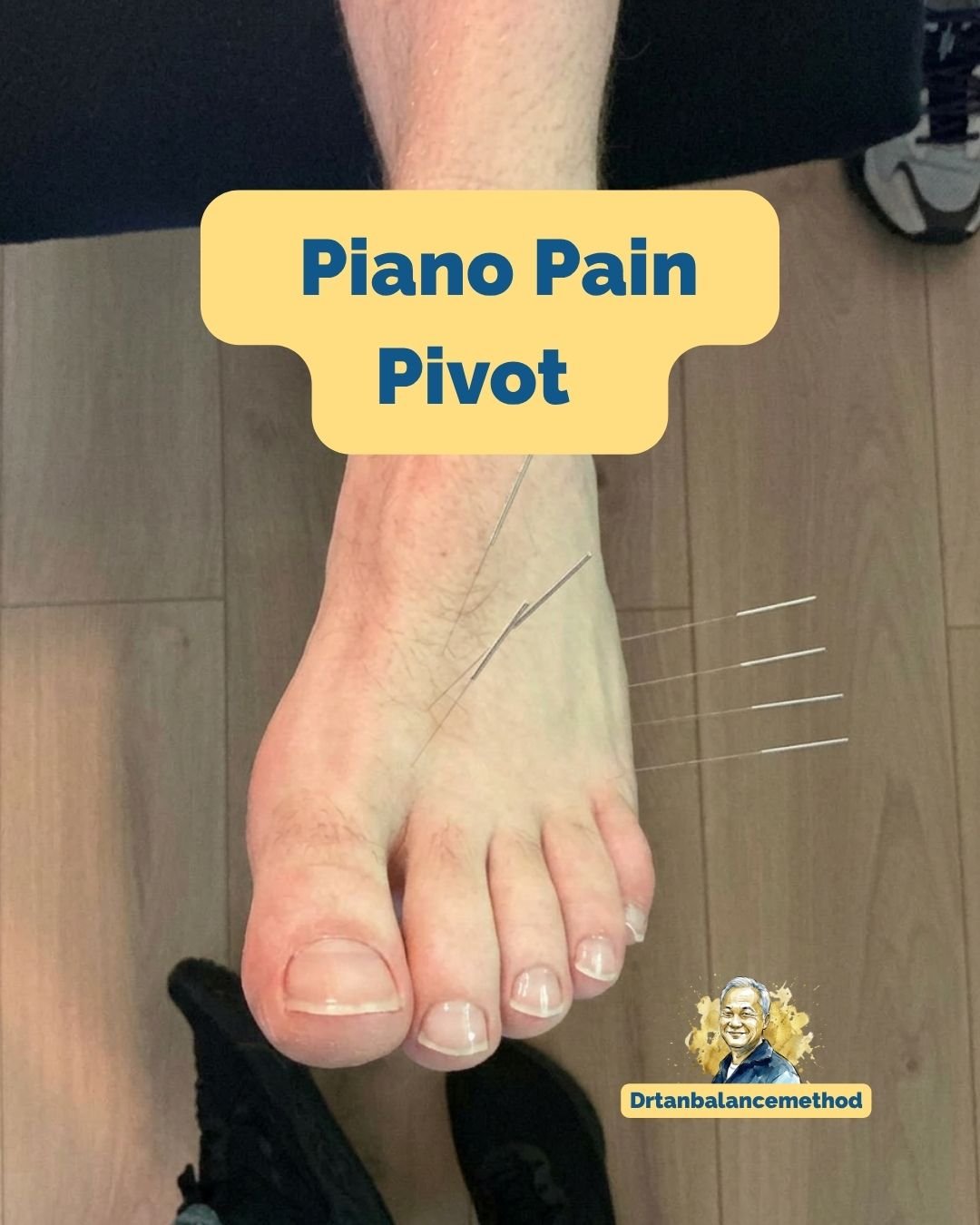
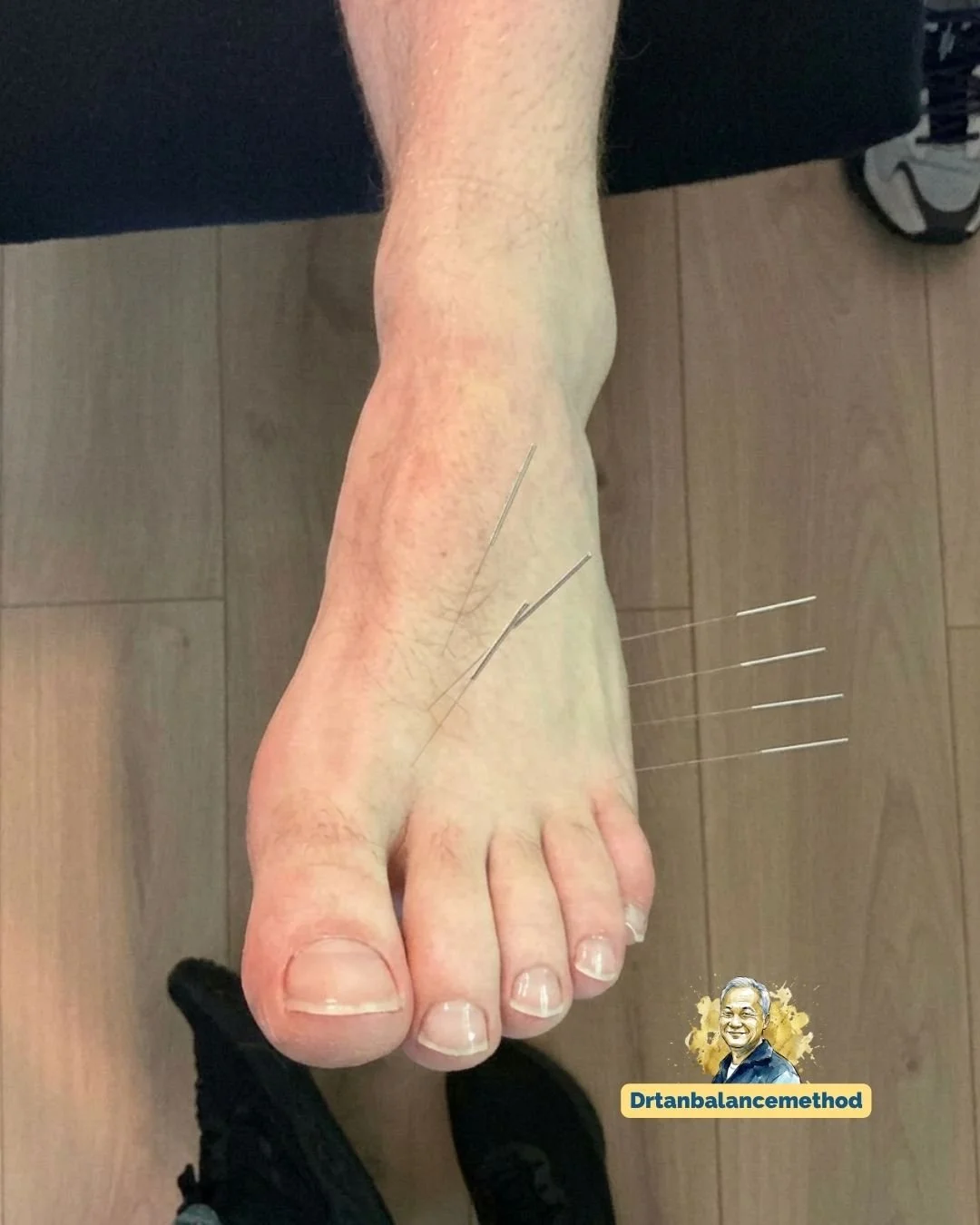

The Pivot — When the Pain Moved
Re-evaluation. The original LI spot was quiet. But he felt a new sharpness — Small Intestine (SI) 3 to 3.3, just behind the original area, on the side of the hand below the little finger.
The Liver System 2 treatment had cleared Large Intestine. It didn't reach Small Intestine. The SI pain was always there. It was just masked by the louder LI pain. Clear the top layer, the layer underneath finally talks.
New diagnosis. Small Intestine is now the sick meridian. Urinary Bladder (UB) via System 1/5. Needles at UB 64 to 65. The new pain disappeared within seconds.
Outcome
Total: 6 sessions. Pain cleared on both Large Intestine and Small Intestine territories. Full playing capacity restored.
The Lesson: Pain Has Hierarchy
Pain isn't a single signal. When two meridians are involved, the louder one masks the quieter one. You clear the louder layer. The quieter layer finally announces itself. That's not a treatment failure. That's how the body works.
Practitioners who don't expect this pattern start second-guessing the diagnosis when the pain shifts. They think they got it wrong. They didn't. The original diagnosis was right. There was just a second layer underneath.
The fix isn't to predict every possible pivot. The fix is to stay in the feedback loop. After every needle, re-evaluate. After every re-evaluation, adapt. The Balance Method isn't a recipe. It's a thinking framework. The body shows you what's next.
The high-demand patient advantage
Musicians, athletes, dental professionals, mechanics, surgeons. Anyone whose work depends on fine hand control. Their pain only fires during the activity. Standard rest-based treatment doesn't work for them — they can't rest. They need real function back.
That's where distal acupuncture wins. By treating away from the painful area, we don't add irritation to tissue that's already being stressed daily. The patient keeps practicing. The next practice session is the most accurate feedback we could ask for.
This applies beyond musicians. A guitarist with thumb pain only when fretting. A tennis player with wrist pain only on backhand. A dentist with finger pain only when gripping instruments. Same logic every time: find the meridian, pick the system, treat distally, let the activity test the result.
Common Mistakes With This Type of Case
1. Skipping the one-finger rule because the case looks obvious
"Pain in the hand" sounds simple. It isn't. The area below the index finger could be Large Intestine, Small Intestine, or San Jiao depending on the exact spot. One centimeter sideways and you're treating a different channel. Make the patient point. One finger or it doesn't count.
2. Picking the first system option without checking structure
The matrix gives multiple systems for any meridian. They're not interchangeable. One projection might land on tendon, another on bone, another on muscle. For Large Intestine hand pain, Liver via System 2 gave us metacarpal to metatarsal — bone-between-bone matching across the hand and foot — clean match. The system isn't the answer. The right system is.
3. Treating the new spot as treatment failure
The original Large Intestine pain was real. The treatment cleared it. The Small Intestine spot that appeared after is a second problem, not a sign you got the first one wrong. Re-diagnose. Treat the new meridian. Don't doubt your original work.
4. Stopping treatment after symptom relief in the clinic
His resting pain was already absent before treatment. Resting pain means nothing for this patient. We only knew the treatment worked when he reported back after a practice session. Define the success criterion before the first needle.
Apply This in Your Practice
Don't skip the mapping just because the case looks obvious. "Hand pain in a piano player" sounds like an easy diagnosis. It isn't. The area below the index finger can be Large Intestine, Small Intestine, or San Jiao depending on the exact spot. One finger or it doesn't count.
Pick your system by tissue match, not by order on the matrix. Liver System 2 worked here because the foot projection matched the structural level of the hand — metacarpal to metatarsal, bone between bone. Same logic applies on the knee, the shoulder, anywhere. When two systems are equal on paper, the one that matches the tissue wins.
Build the pivot into your expectation from session one. Tell the patient: pain may shift, that means we adapt, not start over. When a new spot appears, treat it as a new diagnosis. The matrix is consistent. Small Intestine is treated by Urinary Bladder via System 1/5. You don't need new memorization for the pivot — you apply the same six systems to the new sick meridian.
Track outcomes by activity, not resting pain. This musician was pain-free at rest the whole time. Resting pain would have called the treatment a success after session 2. Activity told us the truth: there was still work to do.
Don't fear chronic activity-triggered cases. Hand pain that only appears during a specific task often looks scary — the patient has tried everything, nothing worked. But these cases respond well to distal acupuncture precisely because the structure isn't damaged. The meridian needs balancing, not the tissue rebuilding. Take the case, do the mapping, follow the framework.
Quick Reference: This Case
- LI 3.2 to 4.2 → Large Intestine meridian
- Liver via System 2 → project to opposite foot, ashi at LIV 2 to 3
- Pain moves to SI 3 to 3.3 → re-diagnose: SI is now sick meridian
- UB via System 1/5 for SI → needle UB 64 to 65
- When pain shifts mid-treatment → second layer talking, not a failure
- High-demand patients → track outcomes by activity, not resting pain
Note: Patient details have been adapted from comparable cases in our clinic to protect privacy. This post is for educational purposes only — for acupuncturists and interested professionals. Not treatment advice or a substitute for professional consultation.
Want the Complete Reference?
Every System, Every Projection, Every Pattern at Your Treatment Table
The Balance Method Notebook gives you the complete Local and Global Balance reference. The new Meridian Conversion specialization goes deeper: master the tools to calm the Shen, balance hormones, and treat depression, addiction, and insomnia. Every pattern, every gua structure, every conversion — mapped and hand-drawn for the treatment table.
Explore the Notebooks →balancemethodnotebook.com
Next Steps
This case applies foundational concepts from our pillar guides. To go deeper:
For the diagnostic foundation: how to diagnose the sick meridian
For the six systems framework: The 6 Systems explained
For projection logic: Mirroring and Imaging in the Balance Method
For point selection technique: How to find the ashi point
For Local vs Global decisions: Global vs Local Balance
For the complete matrix reference: Balance Method Matrix
To watch treatments in action: Needling Demos
To discuss cases with 7,000+ colleagues worldwide: Practitioner Community
New to the terminology? See the Balance Method Glossary for every core term in one place.
