
How to Treat Lower Back Pain with Dr. Tan's Balance Method: A Multi-Meridian Case Study
What do you do when the pain isn't on one meridian, but spreads into a band across the low back? This is a multi-meridian case — more than one channel lit at once — and a reminder that a wide complaint doesn't need a wide, scattered prescription.
A 68-year-old man comes to our clinic six weeks after a long afternoon in the garden. The pain sits low: a tight band straight across the lower back, spilling into both flanks, worse on the left, and on a bad day it wraps forward toward the belly. He rates it a 7 out of 10. It has eased a little on its own, but six weeks in, it won't let go. Let's map it.
When pain draws a band like this, you don't treat “the back.” You ask which meridians the band actually crosses. Trace it: the paraspinal line is Bladder, the flank is Gallbladder, and the part that wraps toward the front is a thread of its own. You don't average them; you map each one.
Patient Profile
| Age | 68-year-old male |
| Complaint | A tight band across the lower back, into both flanks (worse left), wrapping toward the front — 6 weeks after gardening |
| Meridians involved | Bladder and Gallbladder (with a frontal thread) |
| Pain level | 7 out of 10 |
| Pattern | System 2 or 4 — both sides, Ashi-led |
Why This Is a Multi-Meridian Case
One complaint, one meridian, one treating channel — that's the simple case. This wasn't that. The band crossed Bladder and Gallbladder at once, spread across the low back rather than tracking a single line. Pick the loudest part and hope the rest follows, and you'll leave most of the band untreated. So you map everything you feel, then balance each meridian, all in one approach. For the wider framework on low back and sciatic pain, see our back pain and sciatica guide.
The Treatment
Step 1: Map the pain
We start where the patient points. The band runs from L2 to L5, both sides of the spine, straight down the Bladder (UB) line — UB 22 to UB 26. Press into the flank and the tenderness shifts onto the Gallbladder (GB), GB 26 to GB 27. The ache that wraps toward the front on a bad day sits ahead of both. Two sick meridians, a band not a point, plus a frontal thread. Let's go.
Step 2: Pick the systems
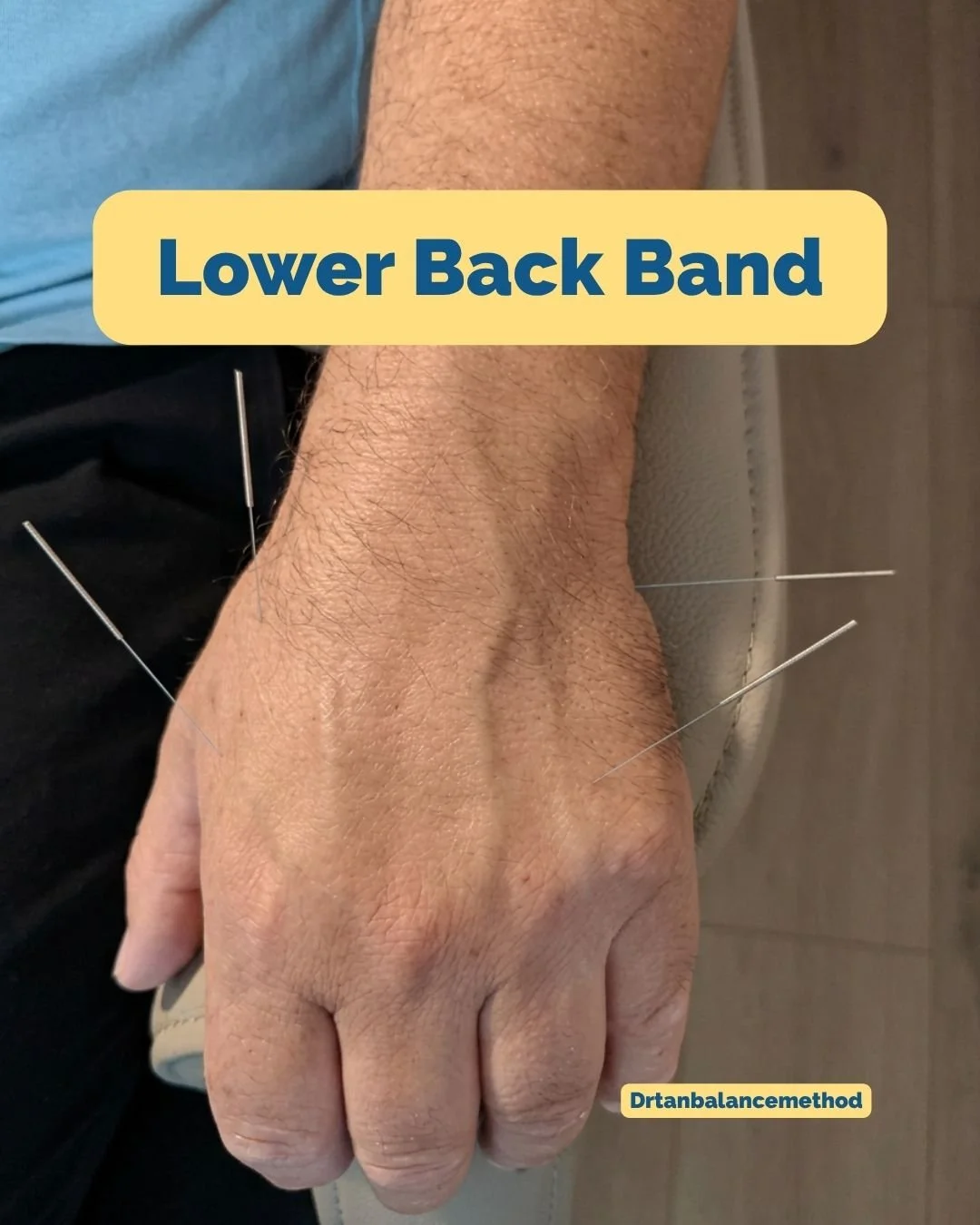
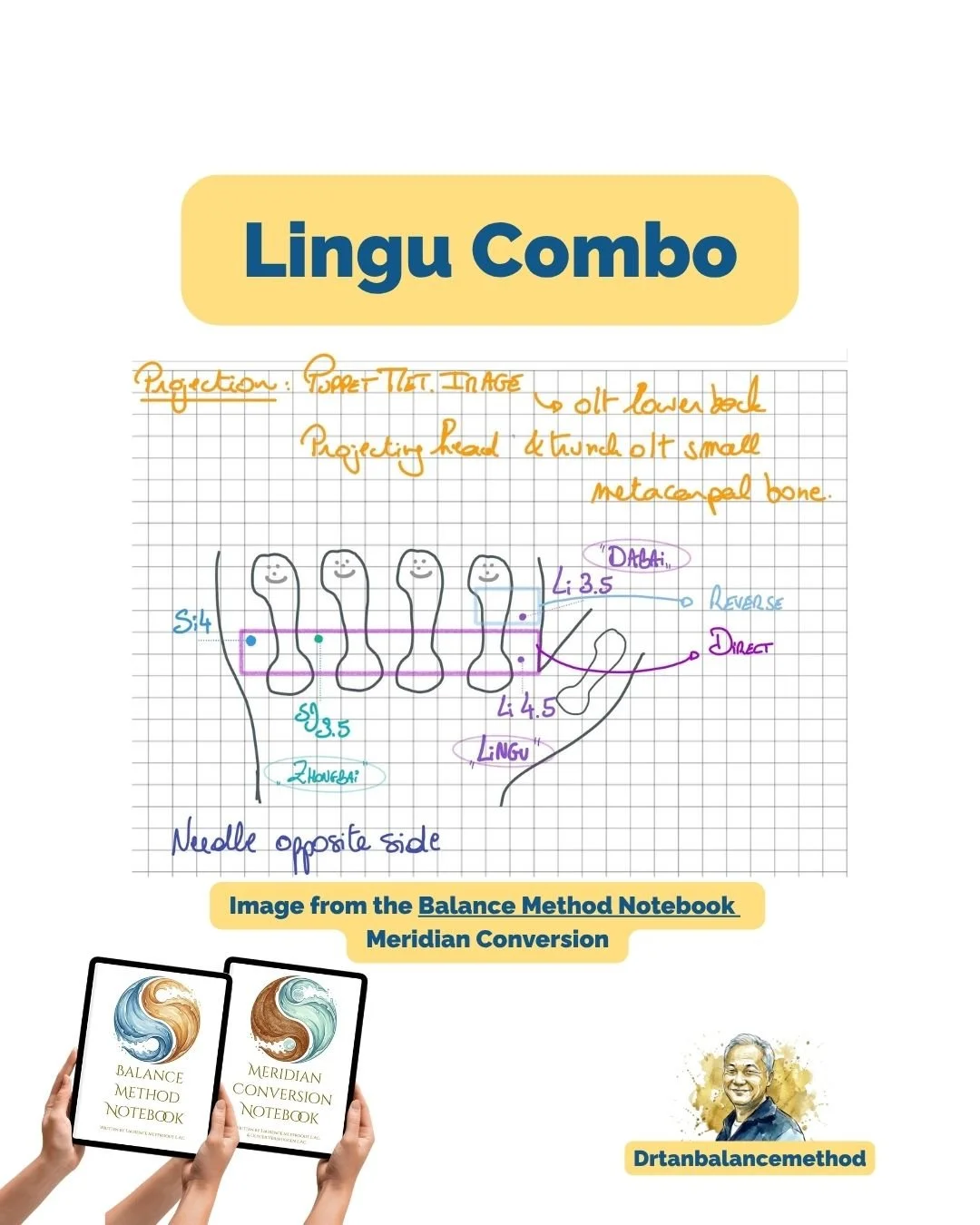
The band sits on both sides of the spine, so you want a both-sides system, one that lets a single balancing meridian cover left and right at once — System 2 or 4. Each affected meridian is balanced through its partner: Bladder through Lung, Gallbladder through Heart. That pairing, Lung and Heart, is Dr. Tan's Million-Dollar Combo for the low back — two distal meridians that between them cover the whole band. For the thread that wraps toward the front, we add a small set of Master Tung points: Lingu and Dabai for the frontal pull, Zhong Bai for the Gallbladder line (San Jiao, System 1), and SI 4 for the sacroiliac corner (Small Intestine, System 1 for Bladder).
Step 3: Needle
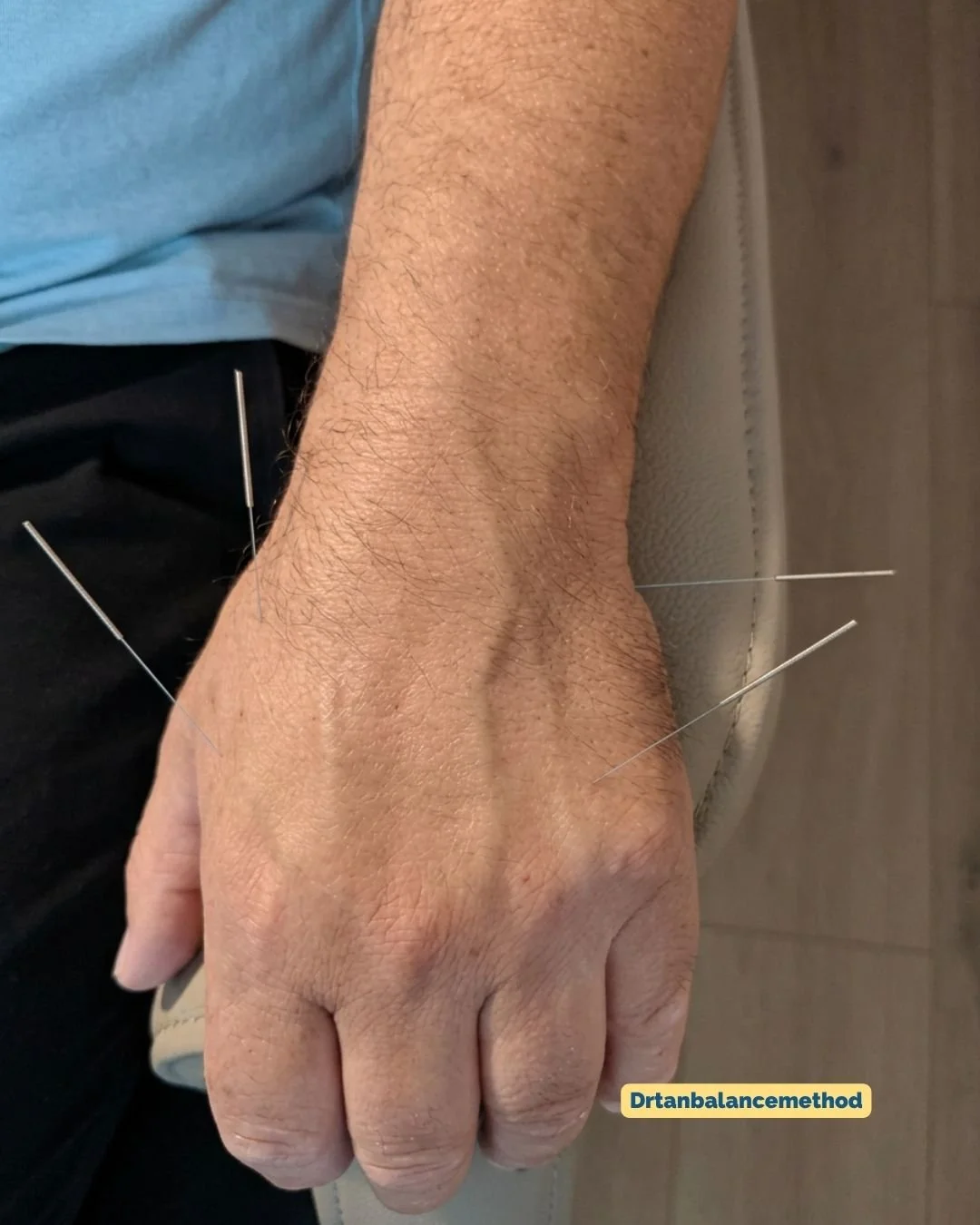
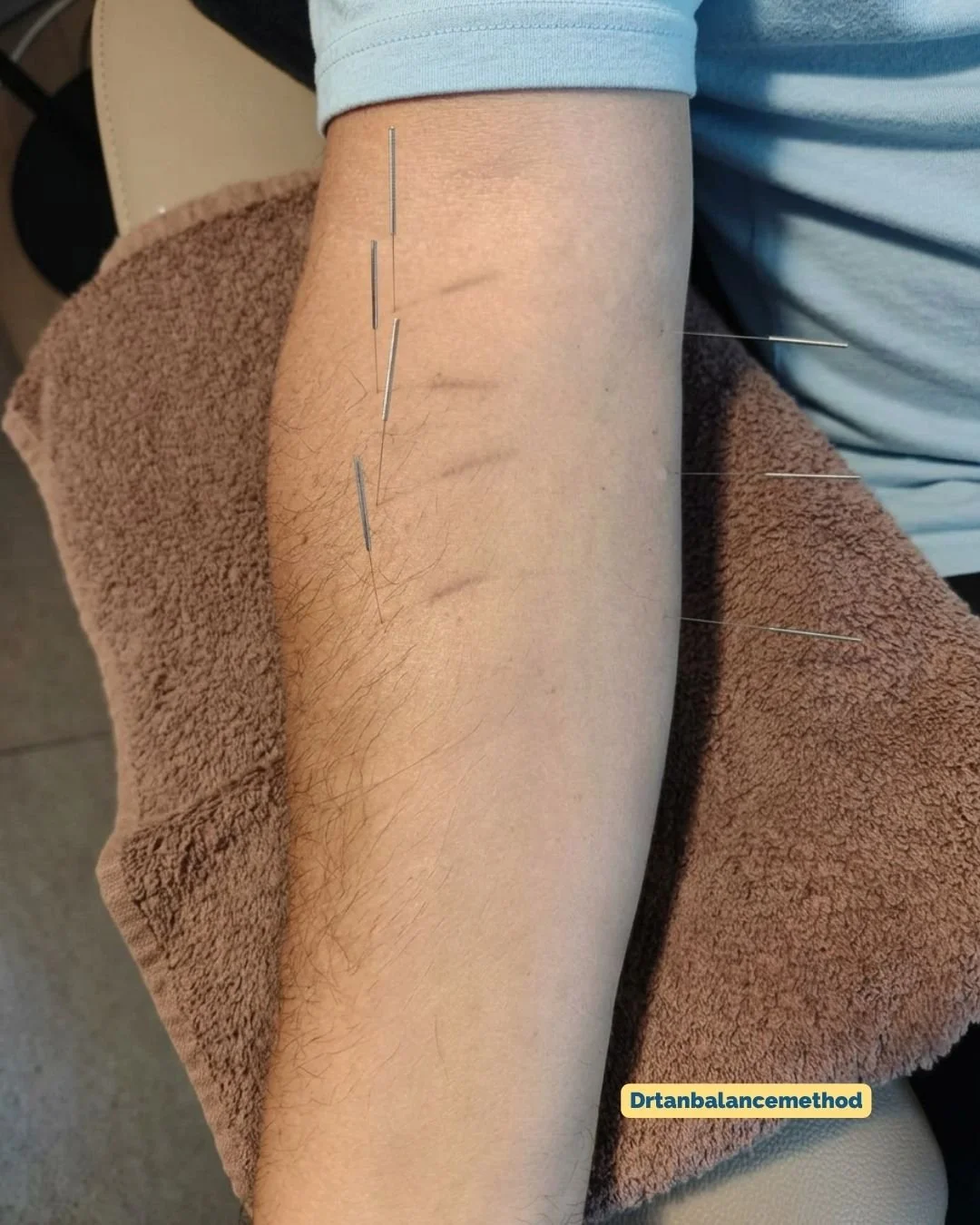
Everything went onto palpated Ashi points. On the arm we worked a stretch from LU 5 to LU 6 and from HT 3 to HT 3.5, hunting the spot that reacts under the thumb. Those two carry the Bladder-Gallbladder band. Then the Tung set: Lingu and Dabai on the Large Intestine for the pain reaching forward, Zhong Bai on the San Jiao for the Gallbladder line, and SI 4 for the sacroiliac corner. You can see these four hand points located and needled in the Lingu combo needling demo.
For palpation-based point selection, see our guide on how to find the Ashi point.
Outcome
Relief arrived while the needles were still going in. The band dropped from a 7 out of 10 to a 1, leaving only a stiff, tight residue — the kind of tightness a six-week guarding pattern leaves behind. We repeated the same combo over two more sessions, and by the third the back pain was gone. Three treatments, one combo, a band cleared.
The Insight: One Combo Can Carry a Whole Band
The lesson here isn't a single clever point. A wide, multi-meridian complaint doesn't need a wide, scattered prescription. Name the meridians the band crosses, choose a both-sides system so one treating meridian covers left and right, and let a proven distal combo — here, Lung and Heart — do the heavy lifting. The Tung points aren't the engine; they're the finish, cleaning up the frontal thread and the sacroiliac corner the main combo doesn't fully reach. Broad problem, tight solution.
What to Watch For With Multi-Meridian Back Pain
1. Don't average the band into one point
The temptation with a band is to find its center and treat that. A band isn't a point; it's a set of meridians. Map each zone separately — spine, flank, front. Miss one and it stays lit after the others quiet down.
2. Bilateral pain wants a both-sides system
When pain sits on both sides of the spine, an opposite-side-only system means treating left and right separately. System 2 or 4 lets one balancing meridian cover both sides from a single limb — fewer needles, cleaner coverage.
3. Let the Ashi lead
LU 5 to LU 6 and HT 3 to HT 3.5 are search zones, not coordinates. Palpate for the spot that reacts and needle that. The combo works because the Ashi anchors it to this patient's band, not a textbook one.
Apply This in Your Practice
Map every meridian before you needle. Here it was Bladder and Gallbladder in one band — two maps, not one average.
Choose your system for the geometry of the pain. Both sides of the spine means a both-sides system. One side only, and any system in the row works.
Keep the supporting points supporting. Lingu, Dabai, Zhong Bai and SI 4 earn their place because the band reaches the front and the sacroiliac corner. If a band stops at the spine and flank, the Lung-Heart pair alone may be all you need.
Quick Reference: This Case
- Lower back band, L2-L5 both sides, into both flanks (worse left), wrapping toward the front — 6 weeks after gardening
- Multi-meridian map: Bladder (UB 22 to UB 26) and Gallbladder (GB 26 to GB 27), with a frontal thread
- System 2 or 4, both sides → Bladder through Lung, Gallbladder through Heart
- Needling: LU 5 to LU 6 and HT 3 to HT 3.5 on Ashi, plus Lingu, Dabai and Zhong Bai (Master Tung) and SI 4 for the sacroiliac corner
- Pain fell from 7 out of 10 to 1 during needling; gone after three sessions
Note: Patient details have been adapted from comparable cases in our clinic to protect privacy. This post is for educational purposes only — for acupuncturists and interested professionals. Not treatment advice or a substitute for professional consultation.
Want the Complete Reference?
Every System, Every Projection, Every Pattern at Your Treatment Table
The Balance Method Notebook gives you the complete Local and Global Balance reference. The new Meridian Conversion specialization goes deeper: master the tools to calm the Shen, balance hormones, and treat depression, addiction, and insomnia. Every pattern, every gua structure, every conversion — mapped and hand-drawn for the treatment table.
Explore the Notebooks →balancemethodnotebook.com
Next Steps
This case applies foundational concepts from our pillar guides. To go deeper:
For the diagnostic foundation: how to diagnose the sick meridian
For point selection by palpation: how to find the Ashi point
For choosing a both-sides system: the Balance Method matrix
For the full low back and sciatica framework: Balance Method for back pain and sciatica
For where the Tung points fit: Balance Method vs. Master Tung
For the terminology: Balance Method Glossary
To discuss cases with colleagues worldwide: the Practitioner Community
