
How to Treat Foot Pain and Big Toe Numbness with Dr. Tan's Balance Method: A Local Balance Case Study
What do you do when one complaint sits on a meridian and the complaint right next to it sits on nothing at all? This case ran on two maps at once: a stretch of Urinary Bladder on the outside of the foot, and numbness under the big toe where no channel is drawn. One got a meridian. The other got a line.
A 45-year-old man walks into our clinic with pain along the outside of his right foot, on the bone and on the tendon. He plays basketball, and the foot has carried that overload for eighteen months without improvement. Imaging shows inflammation. He rates the pain 4 to 6 out of 10, continuously, right through the day. He also mentions that his right big toe has gone numb underneath. Let's map it.
Pain along the outer border of the foot points at one meridian before any other: the Urinary Bladder (UB). The numbness is the harder half. Turn the toe over and the numb strip runs down the middle of the underside, and there is no classical channel there to name. You do not need one. You need the level.
Patient Profile
| Age & sport | 45-year-old male, plays basketball |
| Complaint | Pain on the outside of the right foot, on the bone and on the tendon |
| Pattern | Urinary Bladder meridian, UB 59.3 to UB 62, plus numbness under the right big toe on the midline Jue Yin line |
| Pain level | 4 to 6 out of 10, continuous through the day |
| Duration | Eighteen months without improvement; imaging shows inflammation |
| Context | Overload from sport |
Why This Is a Local Balance Case
Foot pain of this kind is Local Balance territory. Find the meridian, treat the matching structure on the opposite limb, palpate, then finish what is left. Two details decide how that framework gets applied here, and neither of them is the word foot.
The first is tissue. The pain sits on bone and on tendon, so the answer has to land on bone and on tendon as well. That is anatomical structural similarity: bone answers bone, tendon answers tendon, meridian answers meridian — not merely the same name on the other side, but the same structural level on the other side. The full reasoning behind that choice sits in the 6 Systems explained.
The second is that one of the two complaints has no channel under it. Here's the temptation: treat the pain, watch it clear, and assume the numbness will follow it out of the room. It won't. A complaint that sits off the channel map needs its own map, and it needs it before you pick up the second needle.
The Treatment
Step 1: Map the pain
The pain ran from UB 59.3 to UB 62 on the right foot — a stretch along the Urinary Bladder meridian, sitting on the bone and on the tendon rather than on one clean point. The numbness sat under the right big toe, on the midline: the Jue Yin line, where no meridian runs. One complaint on a channel, one on a line. That is the map. For the diagnostic step behind it, see how to diagnose the sick meridian.
Step 2: Pick the system
Local Balance, System 3. The complaint sat on the right, so every needle went into the opposite side: the left. System 3 balances the Urinary Bladder through the Kidney, and the structural match decides where on that Kidney side to look. Bone for bone, tendon for tendon.
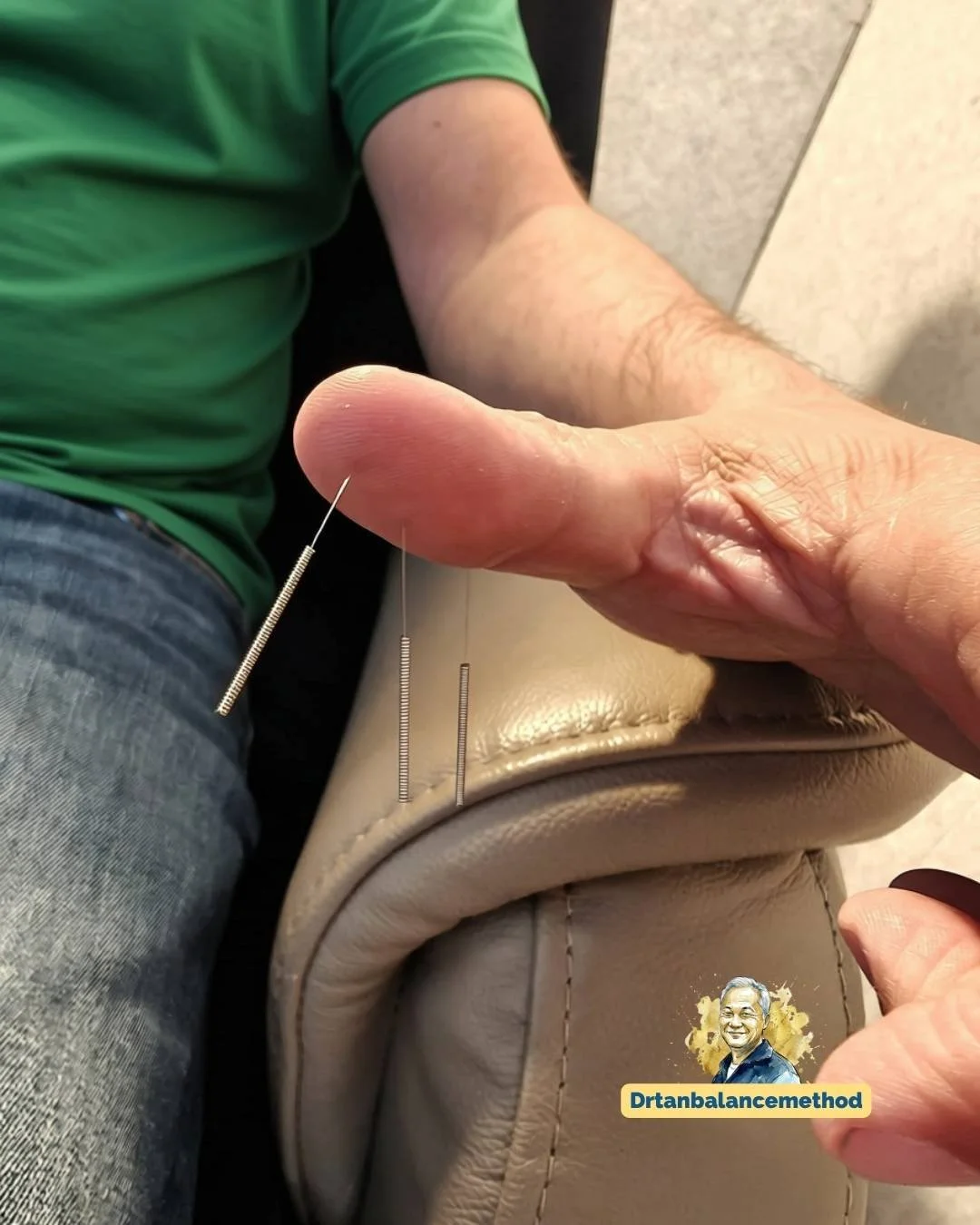
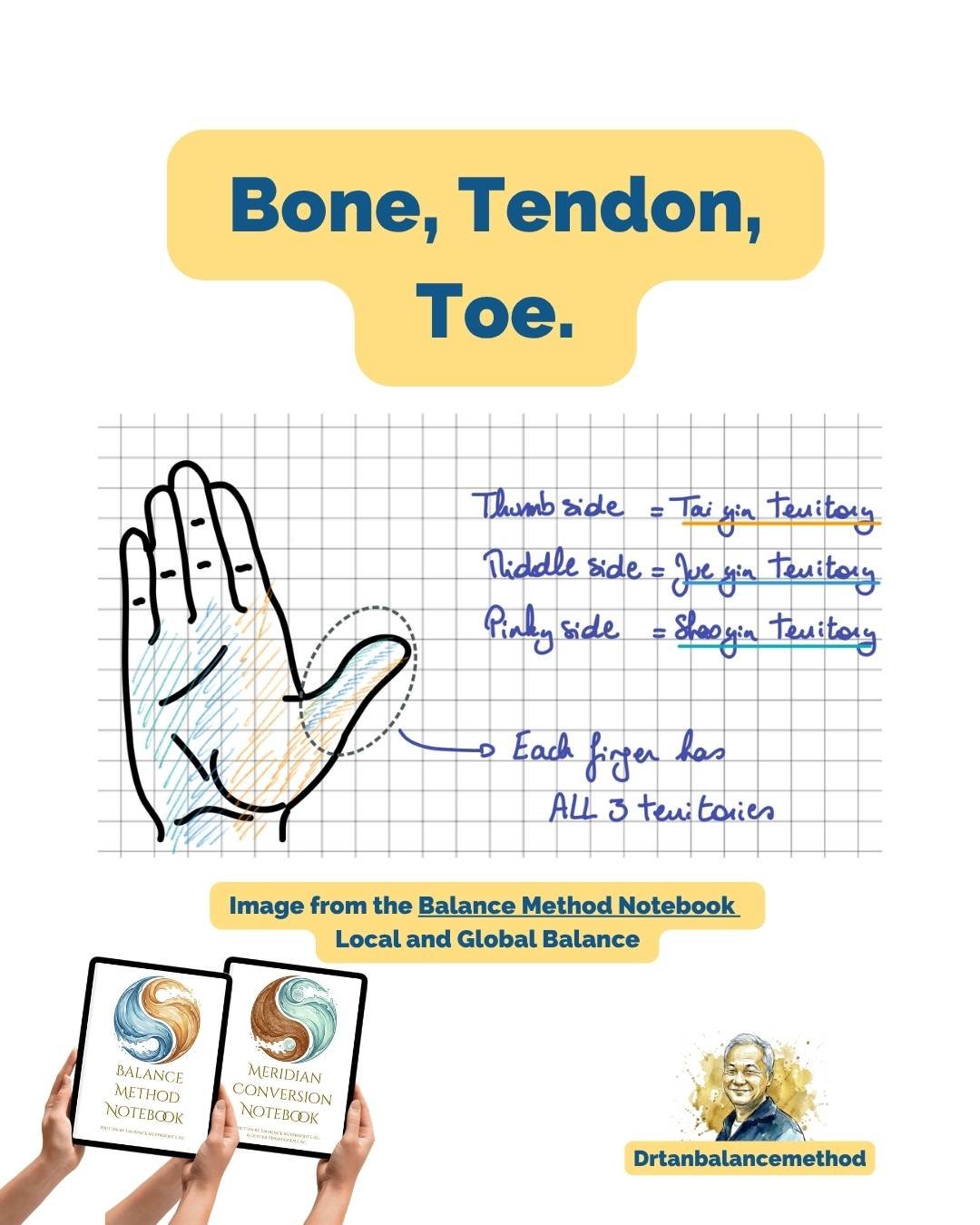
The numb toe gets its own answer. The Jue Yin line under the right big toe mirrors to the midline under the left thumb. Jue Yin for Jue Yin, toe for thumb.
Step 3: Needle
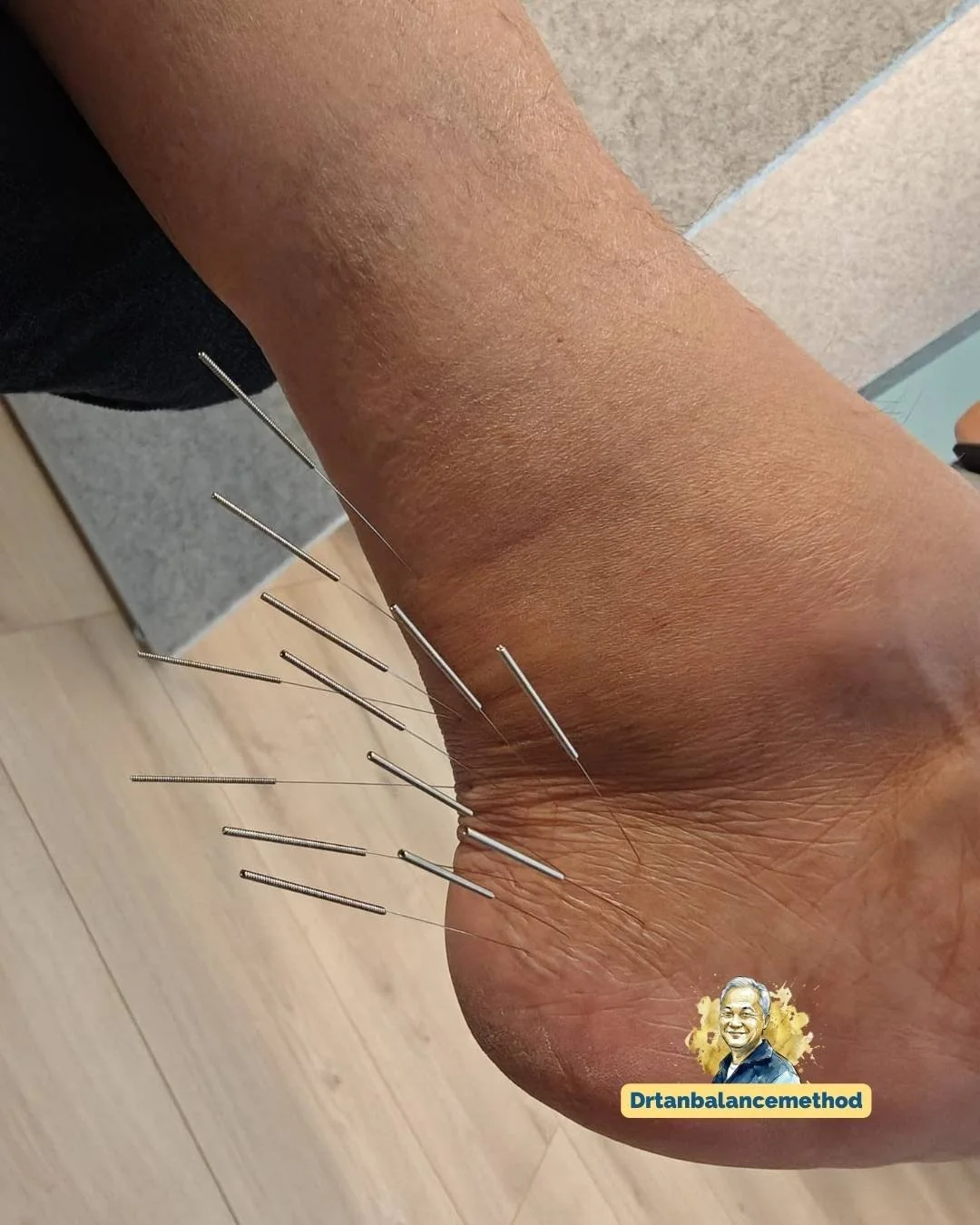
We palpated on the bone at Kid 4 and Kid 5, below Kid 6, and along the tendon insertion on the bone around and below the Kidney meridian. Every needle went onto a palpated Ashi point. The pain dropped immediately, and the ankle felt less stiff with it. The back of the tendon was still tender in the middle, between Kidney and Bladder up to the level of Kid 7, so that was needled as well.
What stayed was the numbness under the big toe. We needled the Jue Yin line on the left thumb, and the toe woke up: the sensation came back. Two complaints, two answers, one session.
Outcome
He came in for eight sessions in total, and the pain went from 4 to 6 out of 10 down to nothing. Those are two results worth separating. The pain dropped on the table during the first treatment, and it still took eight sessions before that drop became permanent. Relief in the room and a result that stays are different outcomes on different timelines, and for a man who reloads that foot every time he steps back onto the court, it is the second one that counts.
He is building back up to basketball quietly and it is going well. We advised him to keep taking it easy for a while so the tissue can finish recovering, and to come straight back if the pain returns.
The Insight: When the Complaint Has No Channel
The pain in this case came with a channel and a decimal range to go with it. The numbness came with neither. Under the big toe, on the midline, there is no meridian to name, and that is precisely where the second complaint lived. Wait for a channel to appear there and you treat one half of the case and call it finished.
A line is enough. The Jue Yin line under the toe mirrors to the Jue Yin line under the thumb, and needling that line brought the sensation back after the pain had already gone. The same thinking placed the needles between Kidney and Bladder at the back of the tendon: not on a point, on the strip between two pathways where the tenderness actually was.
Map what you find rather than what the chart offers. If a channel covers it, use the channel. If nothing covers it, use the line and the level. The projection logic does not stop working where the drawing stops.
What to Watch For With Local Balance Cases
A symptom with no meridian under it is easy to leave out of the plan, or to file as something to look at later. It is still a complaint, it still has a level, and it still mirrors. The numbness here needed one line on one thumb.
2. Expecting one balance to answer two complaints
The Kidney-side needling cleared the pain and left the numbness exactly where it was. That is not a treatment falling short. It is a second complaint with its own map, waiting for its own needle.
3. Treating the region instead of the tissue
Foot pain is not a treatment plan. Bone pain and tendon pain each ask for the same structure on the balancing side, and that structural match is what makes the system choice work rather than a simple name match between two meridians.
Apply This in Your Practice
Palpate the tissue, not only the meridian. Ask what is hurting before you ask where. Bone and tendon are different answers, and they send you to different places on the balancing side even when the meridian pair stays the same.
Give each complaint its own map. Two symptoms in one foot are not one problem with two names. Map them separately, balance them separately, and check each one after needling rather than assuming the second followed the first.
Use the line when there is no channel. Anatomy still projects where no meridian is drawn. Take the level, find the matching line on the mirroring limb, and treat it there. For the reasoning behind that choice, see Global vs Local Balance.
Plan the build-back with athletes. Pain leaving is not the same as tissue being ready. Sport reloads the exact structure you have just calmed, so the return to training belongs in the treatment plan, and so does the instruction to come back at the first sign of the pain returning.
Quick Reference: This Case
- 45-year-old basketball player, right foot pain on bone and tendon, eighteen months, imaging shows inflammation
- Map: UB 59.3 to UB 62 on the right foot, plus numbness under the right big toe on the midline Jue Yin line, where no meridian runs
- Local Balance, System 3 → Urinary Bladder through Kidney, opposite (left) side
- Structural match: bone for bone, tendon for tendon
- Needling: Ashi on the bone at Kid 4 and Kid 5, below Kid 6, and the tendon insertion around and below the Kidney meridian
- Back of the tendon, between Kidney and Bladder up to the level of Kid 7 → needled as well
- Left thumb, midline Jue Yin line → sensation returned in the big toe
- 4-6/10 → 0/10; pain down on the table in the first session, 8 sessions before it held
Note: Patient details have been adapted from comparable cases in our clinic to protect privacy. This post is for educational purposes only — for acupuncturists and interested professionals. Not treatment advice or a substitute for professional consultation.
Every System, Every Projection, Every Pattern at Your Treatment Table
Start with the free chapter and see how the reference works in the clinic.
Foundation · 600+ pages
Balance Method Notebook
The complete Local and Global Balance reference, hand-drawn for the treatment table.
Specialization · 500+ pages
Meridian Conversion Notebook
Beyond pathway treatment: calm the Shen, balance hormones, work with depression, addiction and insomnia.
Instant download · No signup
Next Steps
This case applies foundational concepts from our pillar guides. To go deeper:
For the diagnostic foundation: how to diagnose the sick meridian
For point selection by palpation: how to find the Ashi point
For the six systems framework: the 6 Systems explained
For projection and opposite-side logic: Mirroring and Imaging in the Balance Method
For Local vs Global decisions: Global vs Local Balance
For a multi-meridian case one joint higher: our ankle pain case study
For the complete matrix reference: Balance Method Matrix
To discuss cases with colleagues worldwide: Practitioner Community
New to the terminology? See the Balance Method Glossary for every core term in one place.
