
How to Treat Ankle Pain with Dr. Tan's Balance Method: A Multi-Meridian Case Study
What do you do when a patient comes in for one thing, and the problem turns up somewhere else? This case is a compensation injury — pain that had nothing to do with where it started — and a reminder to treat what you actually feel rather than what the chart predicts.
A 48-year-old woman comes to our clinic, still on crutches after knee surgery. Out of nowhere, her left ankle has started to hurt, to the point where she can't put any weight on it. The cause is no mystery: offload one leg onto crutches and the strain has to land somewhere. Here it landed on the opposite foot. Let's map it.
Palpating across the joint, the pain crossed three meridians — Kidney, Spleen and Liver — with the tendon on the inner side tight as well. That's a multi-meridian map: more than one channel, each needing its own treating meridian. You don't average them; you map each one.
Patient Profile
| Age | 48-year-old female |
| Complaint | Sudden left ankle pain, unable to bear weight — after knee surgery, on crutches |
| Meridians involved | Kidney, Spleen and Liver (with the tendon on the inner side) |
| Pain level | Could not bear weight before treatment |
| Pattern | System 3 — opposite side, Ashi-led |
Why This Is a Multi-Meridian Map
One complaint, one meridian, one treating channel — that's the simple case. This wasn't that. The pain crossed Kidney, Spleen and Liver at once, spread across the joint rather than tracking a single line. Pick the loudest part and hope the rest follows, and you'll leave most of the area untreated. So you map everything you feel, then balance each meridian — all in one approach.
The Treatment
Step 1: Map the pain
Left ankle, with no single line to it. Across the joint the pain ran through Kidney, Spleen and Liver, with the inner-side tendon tight. That's the map — a zone, not a point. Let's go.
Step 2: Pick the system
We worked System 3 and treated the opposite side: the ankle was on the left, so every needle went into the right leg and foot. Each affected meridian is balanced through its partner — Spleen through Stomach, Liver through Gallbladder, Kidney through Urinary Bladder.
Step 3: Needle
Everything went onto palpated Ashi points. Along the Bladder line we worked a stretch from UB 62 toward UB 59.5, used the GB 40 and ST 41 areas, and added needles between those meridians, around the joint. Some went in deep, because the deeper the pain, the deeper the needle has to reach.
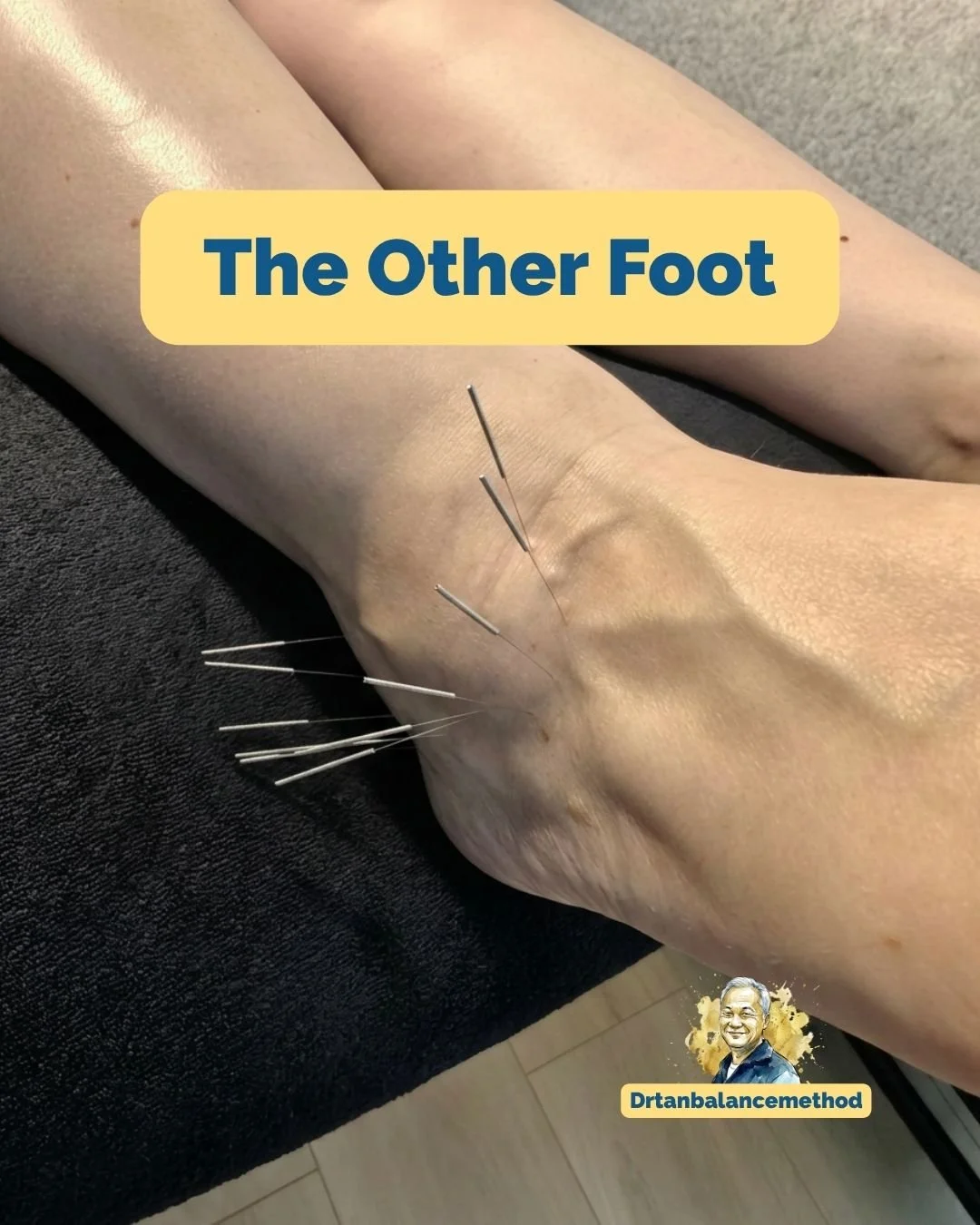
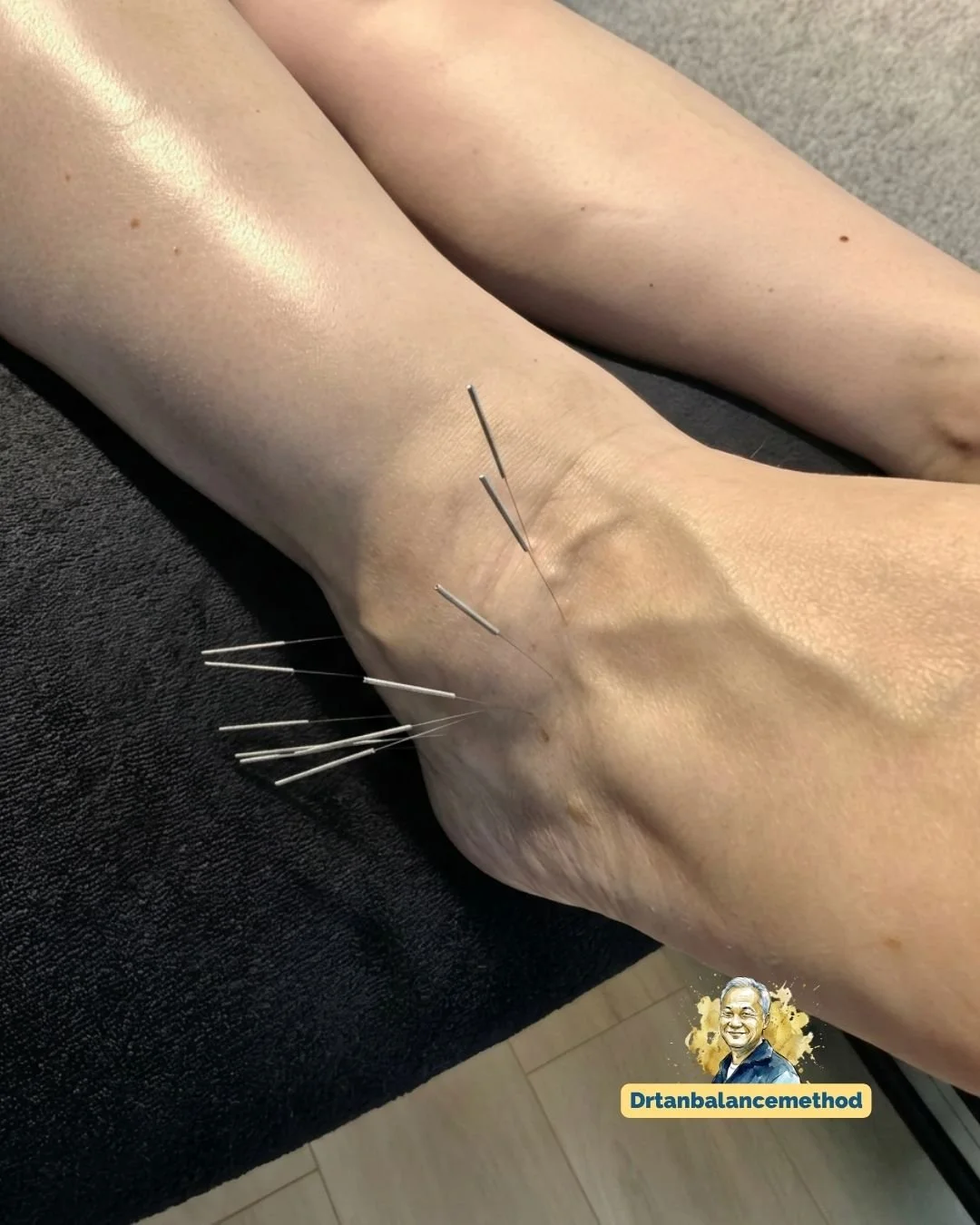

Point or zone? A single point when the pain sits on one clean line you can trace. A zone when it spreads across more than one meridian — then you needle through the area, including the spaces between the channels.
For palpation-based point selection, see our guide on how to find the Ashi point.
Where the Case Stands
This one is still unfolding, and we're sharing it that way on purpose. She walked in unable to bear weight on that ankle; after a single treatment, she could stand on it again properly.
We're not finished. The strain from the crutches is still there while she recovers from surgery, so we expect to chase it over a few sessions rather than one, until she's back to work pain-free. We'll update the case as it develops.
The Insight: The Cause Isn't Where It Hurts
The complaint in front of you isn't always the one the patient booked for. A knee surgery handed us a foot problem, and that problem didn't respect the lines of a single meridian. Treat the ankle as an isolated event and you miss both the spread of the pain and the reason it appeared. Let palpation guide the needle, let the healthy side carry the painful one, and keep the original cause in view the whole way through.
What to Watch For With Multi-Meridian Cases
1. The ankle wasn't the origin
The crutches were. Treat the painful joint as the whole story and you lose sight of the strain that's still in play. Keeping the real cause in view sets honest expectations for how long it'll take.
2. Don't force a zone onto one line
When pain crosses more than one meridian, picking a single "main" channel leaves most of the area untreated. Map everything you feel first, then decide.
3. Let the Ashi lead
In a spread-out, strained area, the tender spots you find by palpation tell you more than fixed point locations do — and they're what should guide nearly every insertion.
Apply This in Your Practice
Map every meridian before you needle. Here it was Kidney, Spleen and Liver in one joint — three maps, not one average.
Treat the zone, not just the point. When a complaint spreads, needle through the whole area, including the gaps between channels.
Borrow from the healthy side. Treating the opposite limb lets the painful area calm without needling the most reactive tissue — a natural fit for compensation injuries.
Quick Reference: This Case
- Sudden left ankle pain, unable to bear weight — compensation after knee surgery and crutches
- Multi-meridian map: Kidney, Spleen and Liver (with the inner-side tendon)
- System 3, opposite side → Spleen through Stomach, Liver through Gallbladder, Kidney through Urinary Bladder
- Needling: UB 62 to 59.5, GB 40 area, ST 41 area, plus in between — all on Ashi, around the joint, some deep
- Weight-bearing improved after one session; treatment ongoing until pain-free
Note: Patient details have been adapted from comparable cases in our clinic to protect privacy. This post is for educational purposes only — for acupuncturists and interested professionals. Not treatment advice or a substitute for professional consultation.
Want the Complete Reference?
Every System, Every Projection, Every Pattern at Your Treatment Table
The Balance Method Notebook gives you the complete Local and Global Balance reference. The new Meridian Conversion specialization goes deeper: master the tools to calm the Shen, balance hormones, and treat depression, addiction, and insomnia. Every pattern, every gua structure, every conversion — mapped and hand-drawn for the treatment table.
Next Steps
This case applies foundational concepts from our pillar guides. To go deeper:
For the diagnostic foundation: how to diagnose the sick meridian
For point selection by palpation: how to find the Ashi point
For opposite-side point selection: Dr. Tan's mirroring and imaging
For Local vs Global decisions: Global vs Local Balance
For a related multi-meridian case: lateral leg and knee pain
To discuss cases with colleagues worldwide: the Practitioner Community
New to the terminology? See the Balance Method Glossary for every core term in one place.
