
Kris Oosting on Dr. Tan’s Balance Method: Lessons from the First Official Ambassador
Some practitioners spend years collecting techniques. Others find one system, go deep, and never look back. Kris Oosting belongs firmly in the second group. He spent twelve years in TCM acupuncture, grew disappointed with his results, and nearly walked away from the profession — until he discovered Dr. Tan's Balance Method. What followed was three books (the latest now sold in 38 countries), a decade of teaching, and the kind of clarity that's hard to fake. We're proud to introduce him as our very first official Balance Method ambassador, and the conversation Laurence had with him is one of the richest we've recorded.
Who is Kris Oosting?
Kris Oosting is an acupuncturist, herbalist, and teacher based in the Netherlands. He came to the profession with an engineer's mind — the same instinct for systems and logic that would later draw him to Dr. Tan. Over more than two decades, he has built a body of work around a single method:
- →Three books on Dr. Tan's Balance Method — most recently Instant Pain Relief with Balance Method Acupuncture — with a fourth on the way.
- →Over 1,000 acupuncturists trained since 2016.
- →A readership across 38 countries, teaching both in the Netherlands and internationally.
You can find his work and his books at krisoosting.com.
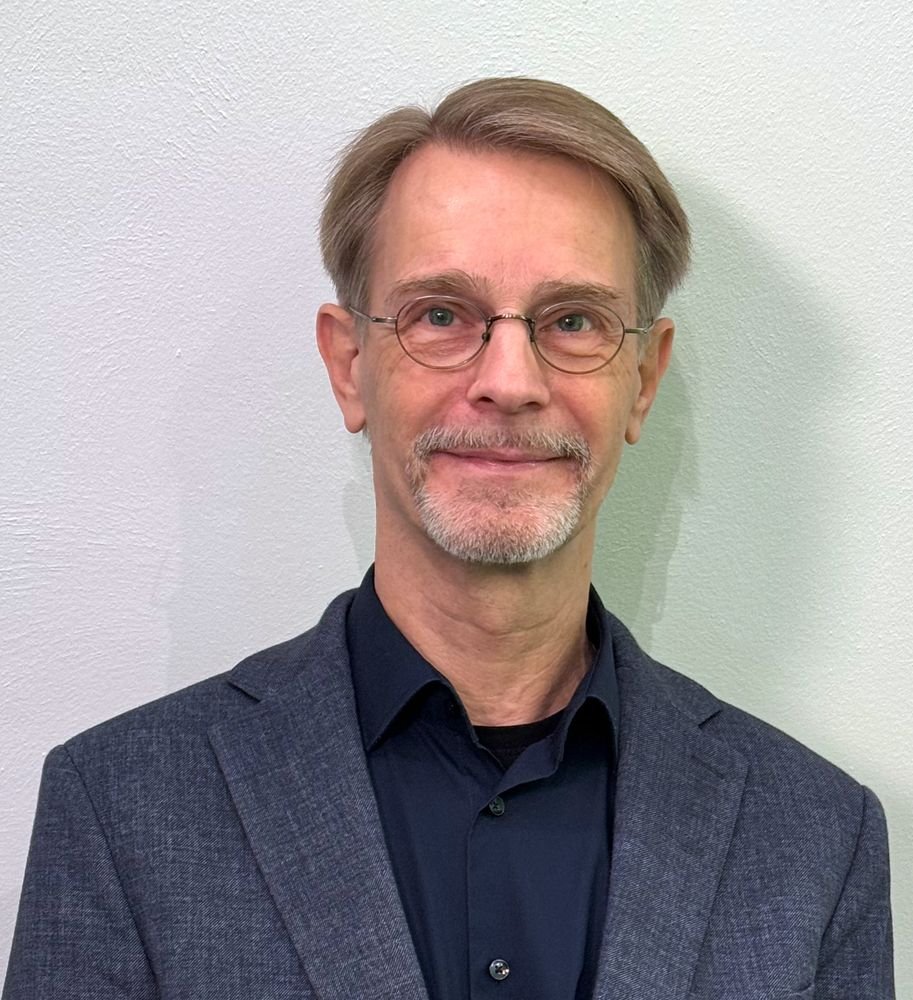
Kris Oosting, the first official Balance Method ambassador.
The turning point
By his own account, Kris was ready to quit. Twelve years of TCM acupuncture and classical herbs, and he wasn't happy with his results. Then Dr. Tan came to the Netherlands, and Kris — sceptical — went to the workshop. What he heard wasn't a list of “if this pain, do that point.” It was strategy, logic, reason. Dr. Tan looked at the body the way an engineer looks at a system, and as a former engineer himself, Kris felt it land. “That resonated,” he told us. By lunch on the first day, he'd made a decision: from that moment on, Balance Method only.
The test came the following Monday. A man phoned with severe foot pain and one condition — no needles in the feet, because previous treatments there had only made it worse. “If you'd phoned me five days earlier, I couldn't have helped you,” Kris said. “But now I can.” Sixty needles later — none of them in the feet — the man was in tears in the clinic. “You gave me back my feet.”
That, Kris says, was the treatment that validated the choice. From then on, there was no going back.
Honouring the teacher
When Dr. Tan passed away, Kris felt the weight of it. “We can't lose this knowledge,” he said. “It's too important. We can help so many patients with it.” But he didn't want to teach it the way others did. So for ten years, out of respect, he kept the words “Balance Method” out of his course titles. “After ten years, I think I'm allowed to now,” he says. “I've shown the teacher I can do it.”
His students kept asking for more, so he wrote it down: a first book in 2020, in memory of Dr. Tan and dedicated to his disciples; a second in 2021; and after a few years of research, a third that now sells in 38 countries. A fourth, on functional treatments, is underway. Dr. Tan, Kris reminds us, never wanted to own the method — he wanted practitioners to take it as a foundation and add something effective of their own. “And I love that,” Kris says. He sees his own additions as the work of a worthy student, not a rival.
Three things every beginner should know
We asked Kris what he'd whisper in a beginner's ear before they start. He gave us three.
It's meridian-based, not point-based
“Lists of point indications are interesting, but not that interesting anymore,” he says. The Balance Method treats the meridian network, not isolated points — which is why you might needle the ankle for shoulder pain. We're network managers, in his words: we know how the network runs and how to influence it with our one tool, the needle. Once that clicks, the distance stops feeling strange.
Don't cling to pattern differentiation
Many practitioners stay locked in Zang-Fu pattern differentiation. It has its place, Kris says, but it's really a herbalist's tool. In the Balance Method you work with global balance structures — four meridians at a time, already “charged” and ready to use. That's a real shift, and people are often surprised by it. But once you accept it, he says, the speed of the results starts to make sense.
Don't fear the needles — and talk to your patient
Beginners often worry about using more needles than they're used to. Kris's point is blunt: it's usually the practitioner who's afraid, not the patient. “We've had patients with sixty needles say, I'm fine, do more — because the pain is gone.” The safeguard isn't using fewer needles; it's feedback. Place a few, ask where the pain is now, place a few more. “That's the only feedback we have.” So talk to your patient — not as an intake, but as a live conversation about what's changing while you work. If three needles do the job, three is enough. If it takes thirty, it takes thirty.
The mindset that changes everything
This was the part Kris lit up for. Most training, he points out, is about helping the patient — almost none of it is about the practitioner's own state. And the thing he sees holding beginners back isn't technique. It's confidence.
His antidote is curiosity. “We're so afraid of failure,” he says — afraid of doing it wrong. But in his framing there's no such thing.
“There is no failure. There's only growth.”
— Kris Oosting
If a treatment doesn't land, you don't panic; you get curious. Where exactly is the pain now? Often the answer points to a wrong meridian or a wrong location, and because the method is logical, you can reason your way back. “I can reason it. Even if I did it wrong, I do reverse engineering.” And he's firm about one trap: don't go chasing the next silver bullet the moment something doesn't work. Ask what you can learn from it instead.
He had one more piece of advice, and it surprised us: read the classics. Not to memorise — “we don't give you a test at the end” — but with curiosity, a page at a time. He told us about a stroke patient whose speech wasn't improving, until he went back to the Ling Shu and read a line he'd long forgotten: the liver controls speech. He changed his structure accordingly, and the patient's speech therapist reported a rapid shift from the moment of treatment. “The classics aren't that bad,” he says, smiling. “But I went in with a curious mind — not ‘what did I do wrong', but ‘what can I discover'. It's a treasure hunt.”
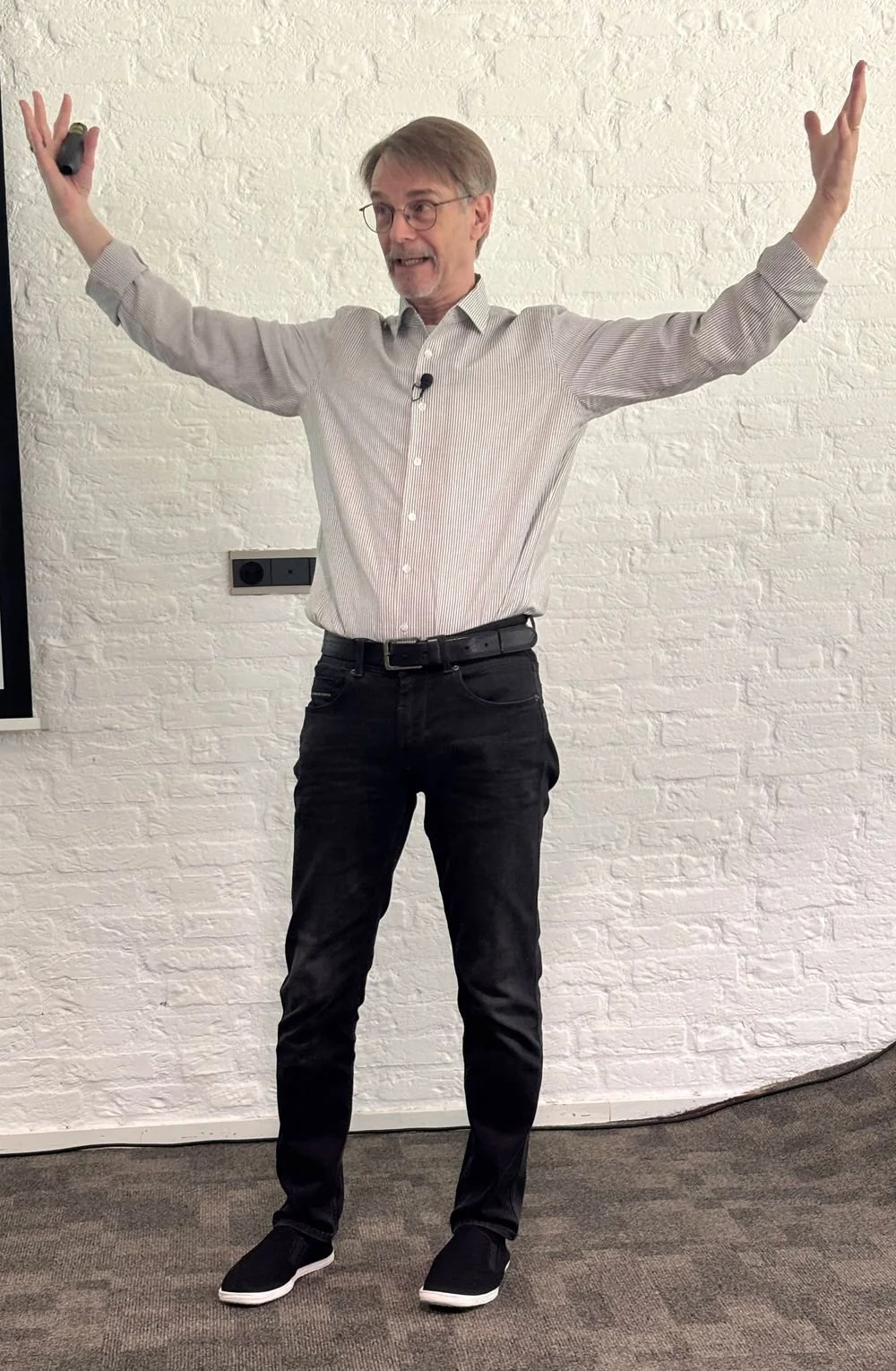
Kris Oosting teaching Dr. Tan's Balance Method
His message to you
We closed by asking Kris for the one thing he wanted every practitioner to walk away with. He gave us something close to a mantra: give people with chronic pain back their quality of life in a safe, affordable, and easy way — and the Balance Method, he believes, is the way to do it.
And then, because Kris is Kris, he left us with a line he attributes to Steve Jobs: “The only way to do great things is to love what you do.” As Balance Method practitioners, he says, we already do.
Frequently Asked Questions
Who is Kris Oosting?
Kris Oosting is a Dutch acupuncturist, herbalist, and teacher, and the author of three books on Dr. Tan's Balance Method, with a fourth on the way. He's the first official Balance Method ambassador. You can find his work at krisoosting.com.
What is the Balance Method?
The Balance Method is a meridian-based system of acupuncture developed by Dr. Tan. Instead of treating isolated points, it works with the meridian network and balanced structures of four meridians at a time to address pain and functional complaints — often with change felt within the same session. If you're new to it, our introduction to the Balance Method covers the essentials.
What mistakes do beginners make with the Balance Method?
The three Kris points to are treating individual points instead of the meridian network, staying locked in Zang-Fu pattern differentiation, and being afraid to use enough needles. His fix for the last one is simple: talk to your patient, and let their feedback on where the pain is now guide how many needles you place.
Where can I find Kris's books?
Kris's books on the Balance Method are available through krisoosting.com, where you can also follow his teaching and his upcoming fourth book on functional treatments.
Go deeper with Kris
Kris has spent more than a decade putting this method into words. If this conversation gave you something to work with, his books take it much further → krisoosting.com
