
How to Treat Burning Foot Pain with Dr. Tan's Balance Method: A Meridian Line Case Study
What do you do when the pain sits on a stretch of the body that no regular meridian crosses? This case is about diagnosing by line instead of by point: read the meridian lines of the foot, mirror them onto the hand, and let palpation place every needle.
A 72-year-old woman comes to our clinic with pain on the sole of her right foot, on the pads right beneath the toes. It burns when she walks. She has been coming to us for a long time and the complaint has improved along the way. Let's map it.
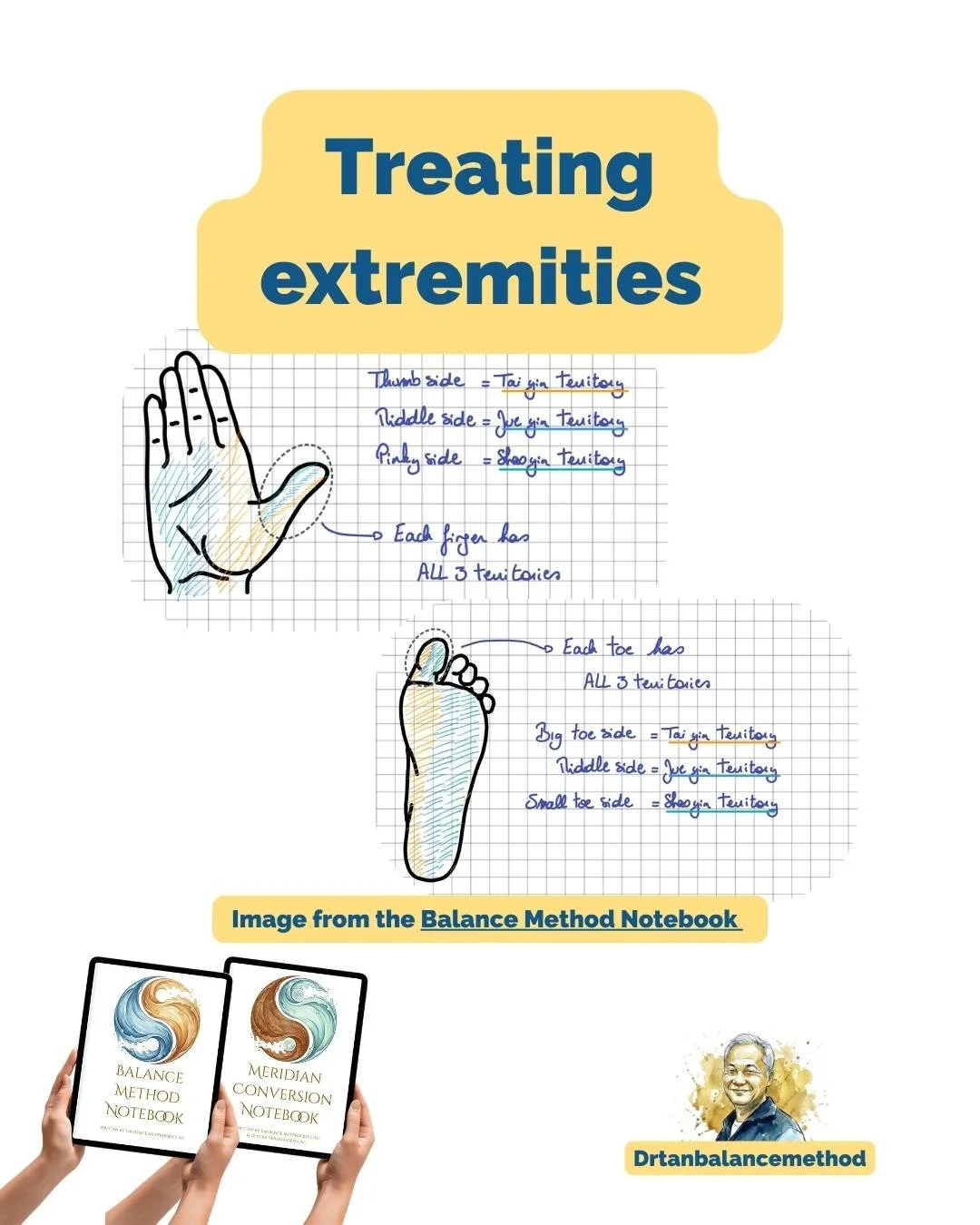
Turn the foot over and the difficulty is obvious. On the sole beneath the toes there are no regular meridians — nothing to name, nothing to trace, no channel to pair. So you stop hunting for a point map that isn't there and read the lines instead: foot Tai Yin, foot Jue Yin, foot Shao Yin, and the ground between them.
Patient Profile
| Age | 72-year-old female |
| Complaint | Burning pain on the sole of the right foot, on the pads beneath the toes, provoked by walking |
| Lines involved | Foot Tai Yin, foot Jue Yin and foot Shao Yin lines of the right foot, and the ground in between |
| Balancing lines | Hand Tai Yin, hand Jue Yin and hand Shao Yin |
| Pattern | Local Balance, System 1 — opposite side, Ashi-led |
| Current interval | One session every 2 weeks |
Why This Is a Meridian Line Case
Most complaints hand you a channel. You trace the ache, it follows a named line, and the point map does the rest. The forefoot is where that convenience runs out. The pads beneath the toes carry no regular meridians, so there is no sick meridian to name in the usual way.
Here's the temptation: needle the sore spot itself and let the local tenderness be the prescription. It won't hold together. A tender pad is a location, not a diagnosis — it tells you nothing about which line to balance or where to balance it.
The lines are still there, though, even where the numbered points stop. Foot Tai Yin runs its course; so do foot Jue Yin and foot Shao Yin, and the sole beneath the toes sits in their territory. Diagnose by line and the case becomes ordinary again: three lines in, three balancing lines out. For the underlying logic, see our guide on how to diagnose the sick meridian.
The Treatment
Step 1: Map the lines
Right foot, sole, on the pads directly beneath the toes, burning on weight-bearing. No regular meridian crosses that ground, so we map it by the lines of the foot: the foot Tai Yin line, the foot Jue Yin line, the foot Shao Yin line — and the spaces in between, because the complaint doesn't stop politely at a line's edge. That's the map. Let's go.
Step 2: Pick the system
Local Balance, System 1 — the pairing that matches a hand line and a foot line carrying the same Chinese name. Hand Tai Yin balances foot Tai Yin. Hand Jue Yin balances foot Jue Yin. Hand Shao Yin balances foot Shao Yin. Three lines, three partners, one system. Everything went on the opposite side, so the right foot was treated through the left hand. For the pairing logic behind this, see Dr. Tan's mirroring and imaging.
Step 3: Palpate, then needle
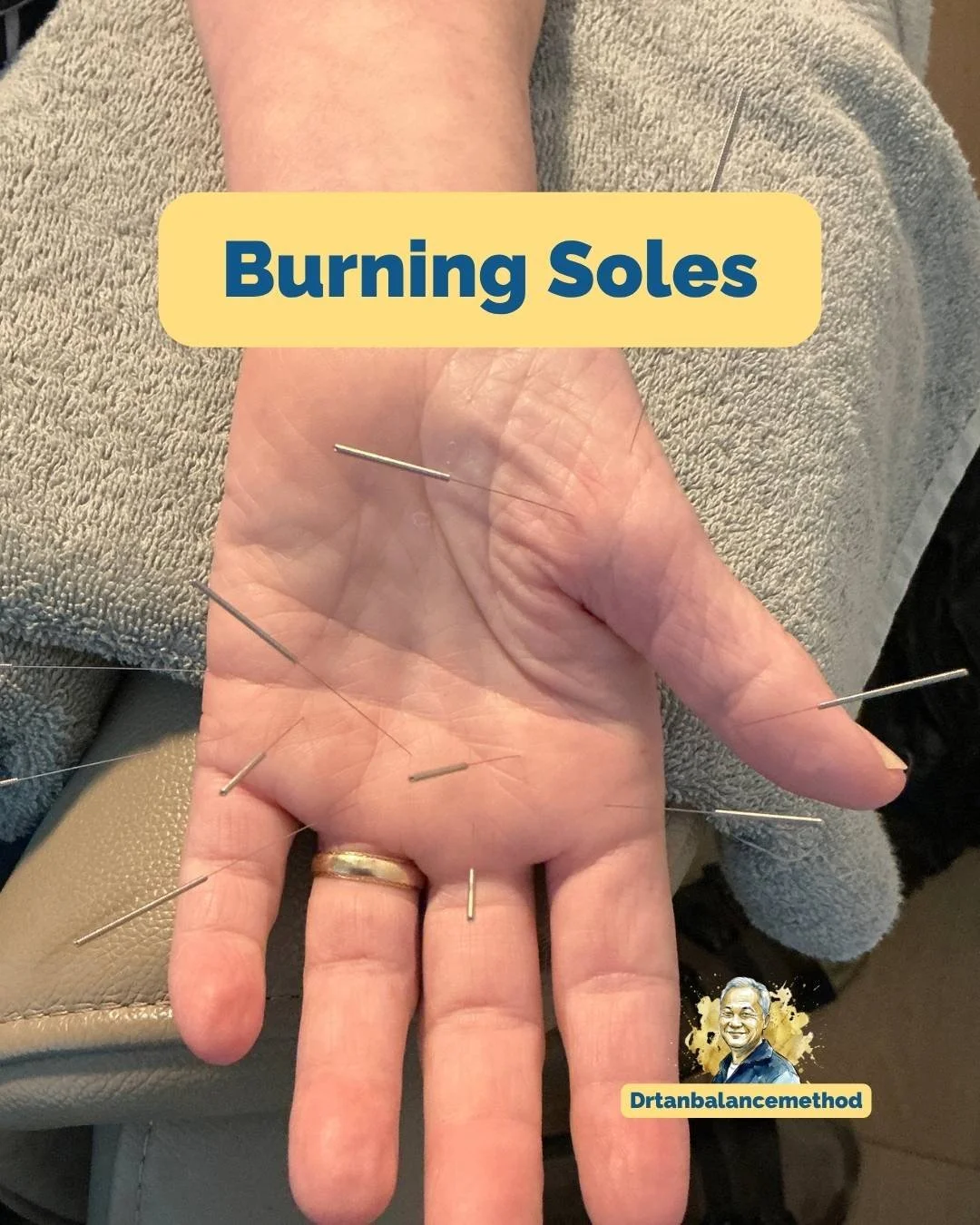
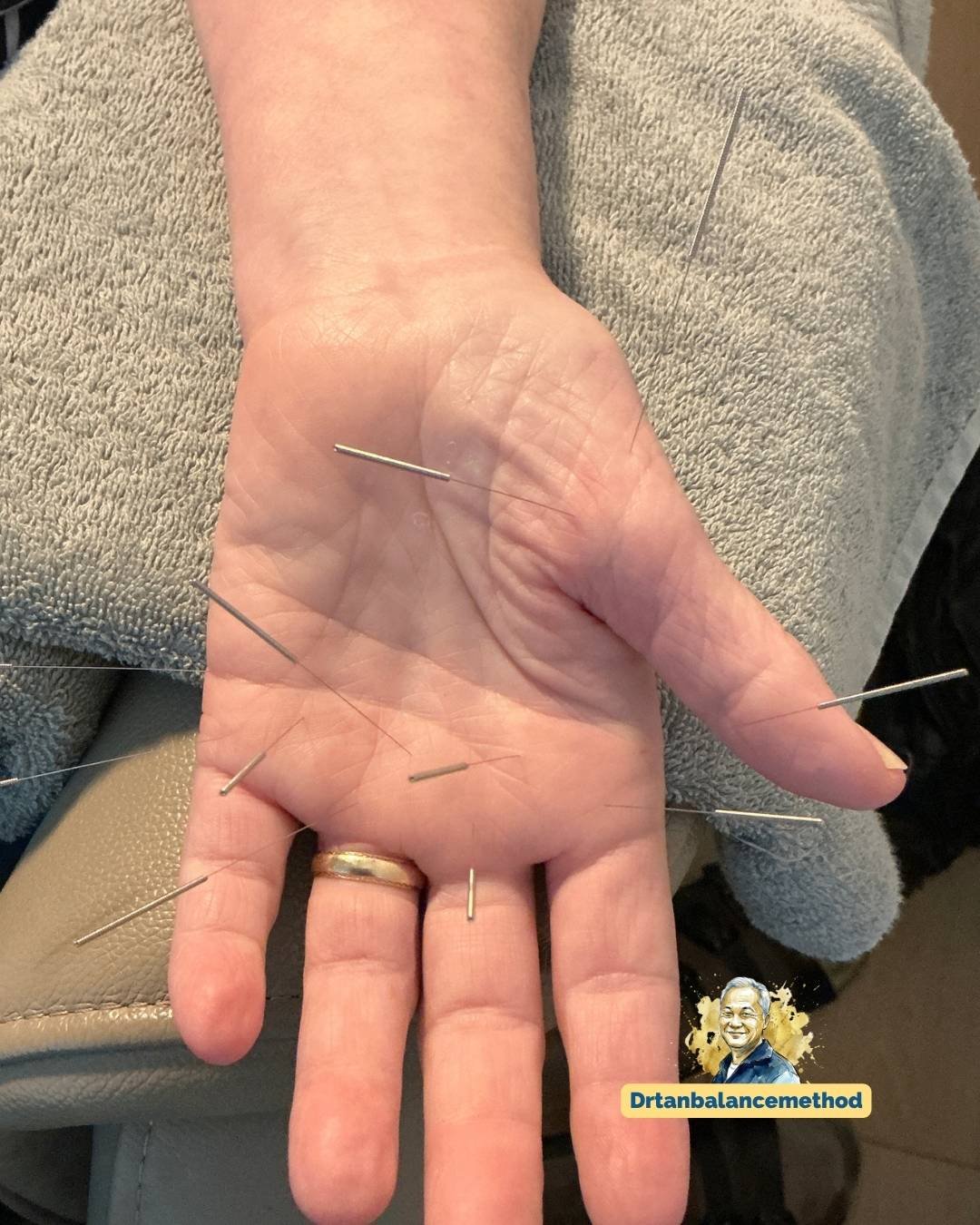
This is a direct mirror. The pain sits right underneath the toes, so the needles go right underneath the fingers — the same geometry, one limb up.
The order matters more than the points here. We palpated the whole hand for Ashi before a single needle went in, and committed the tender spots to memory. Place one needle first and palpate afterwards and that fresh needle can turn tender under the thumb, handing you a false Ashi — a sore spot you created rather than one the patient brought. Palpate the whole field in one pass, then needle what you found.
This foot takes a lot of needles before it comes down, and that is what it gets. The count follows the pain, not the habit.
For palpation-based point selection, see our guide on how to find the Ashi point.
Where the Case Stands
This is a long-running patient, and we're reporting it that way on purpose. She has been coming to the clinic for a long time and has shown improvement along the way. Her sessions are now spaced two weeks apart.
That spacing is the marker worth reporting. This case isn't one afternoon on the table; it's a complaint that has loosened its grip far enough for the gap between visits to be stretched to two weeks. On a maintenance rhythm, the interval tells you more than any single session does.
The Insight: Read the Line Where There Is No Point
The forefoot looks like a gap in the system until you stop reading the system as a list of points. Points are markers on a line; the line is the thing that runs. When a complaint lands between the markers, you haven't left the Balance Method behind — you've simply been handed a case where the line has to do the naming.
Everything downstream stays the same. Name the lines, pair each one under a single system, mirror the geometry onto the matching limb, and let palpation place the needle. The only thing that changed is what you read the diagnosis off.
What to Watch For With Meridian Line Cases
1. Palpate the whole field before the first needle
A needle that is already in can become tender in its own right. Palpate around it afterwards and you may find a spot that belongs to the needle rather than to the patient. Do the searching in one pass, remember what you found, then start needling.
2. Let the pain decide the needle count
The number of needles isn't a style choice. Some feet come down with a handful; this one needs a lot. Needling less because that's your habit, or because the hand feels like a step too far, is a decision made about you rather than about the patient in front of you.
3. Start with one system and stay in it
Diagnosing and treating by line feels uncomfortable the first few times. That's normal and it passes. Keep it simple at the start: System 1, opposite side, and stick with it across a run of patients. Once the reading becomes automatic, experiment with other systems and with fewer needles. For where System 1 sits among the rest, see the six Balance Method systems explained.
Apply This in Your Practice
Map by line when the point map runs out. The sole beneath the toes, the web spaces, the far edges of a limb — when there is no numbered point to hang the diagnosis on, the line running through that territory is still available. Name it and the case proceeds normally.
Do your palpating in one pass. Search the entire treating area for Ashi first, memorise it, then needle. It costs a few seconds and it removes every false positive you would otherwise create yourself.
Mirror the geometry, not the label. Pain directly beneath the toes becomes needles directly beneath the fingers. Read where the complaint sits in relation to the joints around it, and reproduce that relationship on the balancing limb.
Needle the hand anyway. The hand is sensitive and it is tempting to compromise there. But the treatment is measured by what happens to the foot, not by how comfortable the practitioner was while placing the needles.
Quick Reference: This Case
- Burning pain on the sole of the right foot, on the pads beneath the toes, provoked by walking — 72-year-old woman, long-standing patient
- No regular meridians on the sole beneath the toes, so the case is mapped by meridian line: foot Tai Yin, foot Jue Yin, foot Shao Yin, plus the ground in between
- Local Balance, System 1, opposite side → hand Tai Yin for foot Tai Yin, hand Jue Yin for foot Jue Yin, hand Shao Yin for foot Shao Yin
- Direct mirror: pain beneath the toes treated beneath the fingers, on the left hand
- Full Ashi palpation of the hand before the first needle, to avoid a false Ashi created by an already-placed needle
- A high needle count is what this foot needs; sessions are currently spaced 2 weeks apart
Note: Patient details have been adapted from comparable cases in our clinic to protect privacy. This post is for educational purposes only — for acupuncturists and interested professionals. Not treatment advice or a substitute for professional consultation.
Want the Complete Reference?
Every System, Every Projection, Every Pattern at Your Treatment Table
The Balance Method Notebook gives you the complete Local and Global Balance reference. The new Meridian Conversion specialization goes deeper: master the tools to calm the Shen, balance hormones, and treat depression, addiction, and insomnia. Every pattern, every gua structure, every conversion — mapped and hand-drawn for the treatment table.
Explore the Notebooks →balancemethodnotebook.com
Next Steps
This case applies foundational concepts from our pillar guides. To go deeper:
For the diagnostic foundation: how to diagnose the sick meridian
For point selection by palpation: how to find the Ashi point
For where System 1 sits among the rest: the 6 Balance Method systems explained
For the mirroring logic: Dr. Tan's mirroring and imaging
For Local vs Global decisions: Global vs Local Balance
For the complete system reference: the Balance Method Matrix
For a neighbouring case on the same foot: multi-meridian ankle pain
To discuss cases with colleagues worldwide: the Practitioner Community
New to the terminology? See the Balance Method Glossary for every core term in one place.
