
How to Treat Thumb and Neck Pain with Dr. Tan's Balance Method: A Two-Image Case Study
What do you do when a painful thumb, a locked neck and a headache all walk in together, produced by one and the same evening hobby? This case is about checking how far a projection actually reaches instead of reaching for a second one: map each complaint separately, balance them all from the hand, then look at what the first needle really covered before you add another.
A 44-year-old woman comes to our clinic with pain in her left thumb, a neck that will not let go at the base of the skull, and a light headache creeping up over the head. She rates the thumb 7 out of 10. Let's map it.
When two complaints arrive with the same story attached, you are tempted to read them as one picture. Read them apart instead. The Urinary Bladder (UB) meridian runs the whole distance from the base of the skull up over the head to the eyebrow, and that single fact is what this treatment turned on.
Patient Profile
| Patient | 44-year-old woman |
| Complaint | Left thumb pain, plus stiffness at the base of the skull and a light headache running up over the head, both of them on both sides |
| Trigger | Evenings spent bent over a diamond painting — a sustained pinch grip and a head held forward |
| Meridians involved | Lung at the thumb (left) · Urinary Bladder from the neck to the eyebrow (bilateral) |
| Pain level | Thumb 7 out of 10; the neck and head described as tension rather than a score |
| Approach | Local Balance — System 2 for the Urinary Bladder, System 3 for the Lung |
| Treatment side | Right hand throughout — a bilateral complaint covered from one limb by System 2 |
Why Thumb and Neck Pain Is a Two-Image Case
The hobby explains both complaints. A pinch grip held for hours loads the thumb; a head bent forward over the work loads the muscles that attach to the base of the skull. That is a history, and it is a good one. It is not yet a map.
Here's the temptation: let the shared cause become a shared treatment. One patient, one activity, one story, so one strategy ought to cover it. It won't. The thumb sits on the Lung (LU) meridian, at a joint. The neck sits on the Urinary Bladder meridian, at a muscle attachment. Different meridians, different tissue, different systems. What the two complaints share is the reason they arrived on the same day, not the way out.
What they do share is a treatment field. Both of them balanced onto the hand, and that is where the case becomes worth writing up. Every needle in this session went into one hand, and nothing was needled anywhere near the pain. For the decision one level above this one, see our guide on Global vs Local Balance.
The Treatment
Step 1: Map the complaints
Three readings, taken separately rather than as one impression of a tired patient.
The thumb: left side, along the Lung meridian, at the tip and at the first and second phalangeal joint. Joint, not muscle. Not deep. 7 out of 10.
The neck: on both sides, at the base of the skull where the neck muscles attach, on the Urinary Bladder meridian at UB 10. Muscle, and clearly the tissue that had taken the load.
The headache: light, bilateral as well, following the Urinary Bladder meridian from the neck up over the head as far as UB 2.
So: one unilateral complaint on the Lung meridian, and two bilateral ones on the Urinary Bladder. Two of those three sit on the same meridian. That does not make them the same complaint, and Step 3 is where the difference showed up.
Step 2: Pick the systems
Local Balance throughout. Two meridians, two systems.
Urinary Bladder balances to Lung through System 2 — hand for foot, Yin for Yang. That places both the neck and the headache on the Lung meridian, in the hand. And this is where System 2 earns its keep: it needles either side, so a bilateral complaint is covered from one limb. Two sides of the neck and two sides of the head, from one right hand.
The thumb goes the other way, and it can afford to. It is a one-sided complaint, so an opposite-side system costs nothing: Lung balances to Large Intestine (LI) through System 3 — hand for hand, opposite side. The left thumb is therefore treated on the right index finger.
Note what has happened. A bilateral complaint asked for a system that works from either side, and a one-sided complaint asked for a system that works from the opposite side. Both requirements were satisfied by the same right hand.
Step 3: Needle
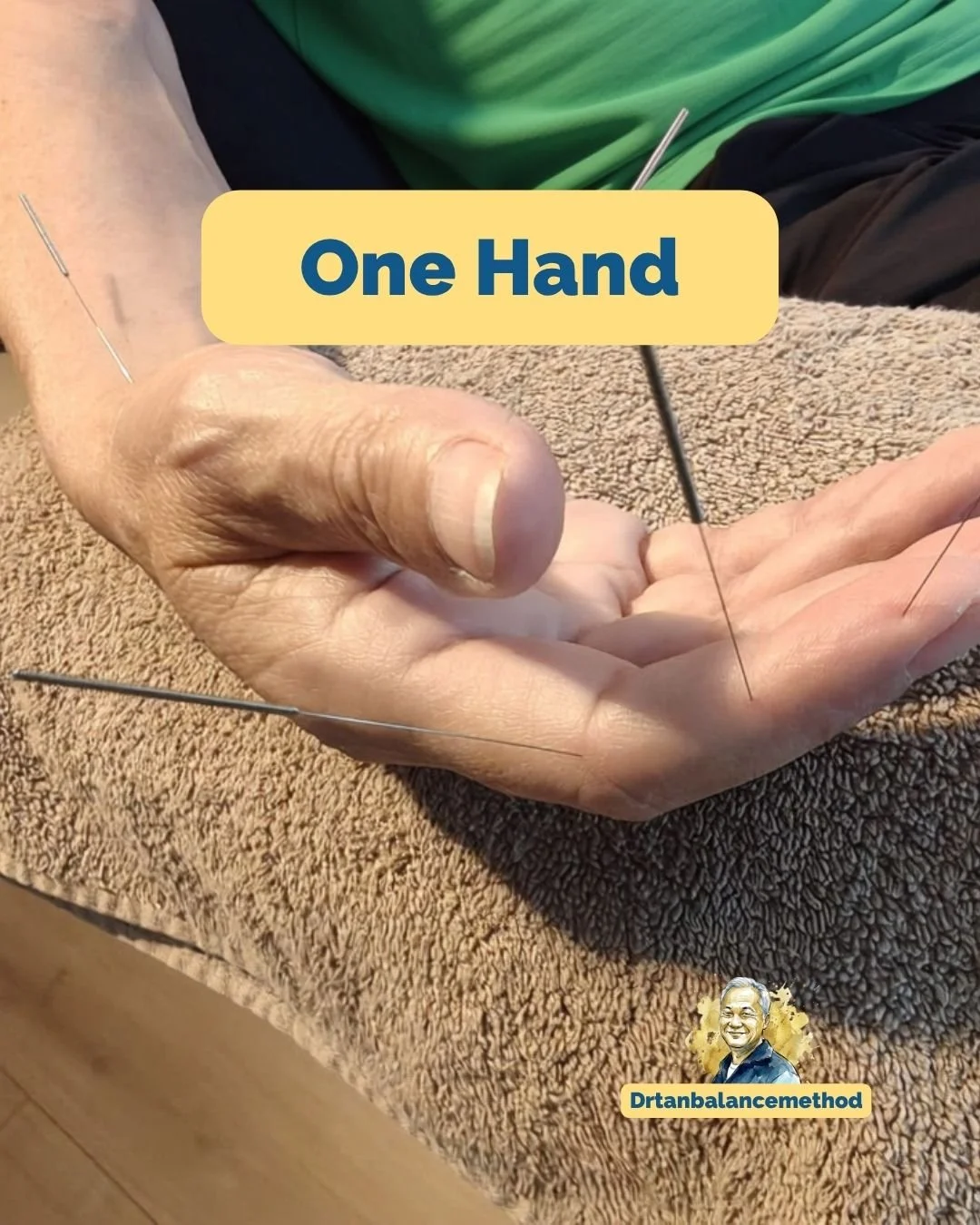
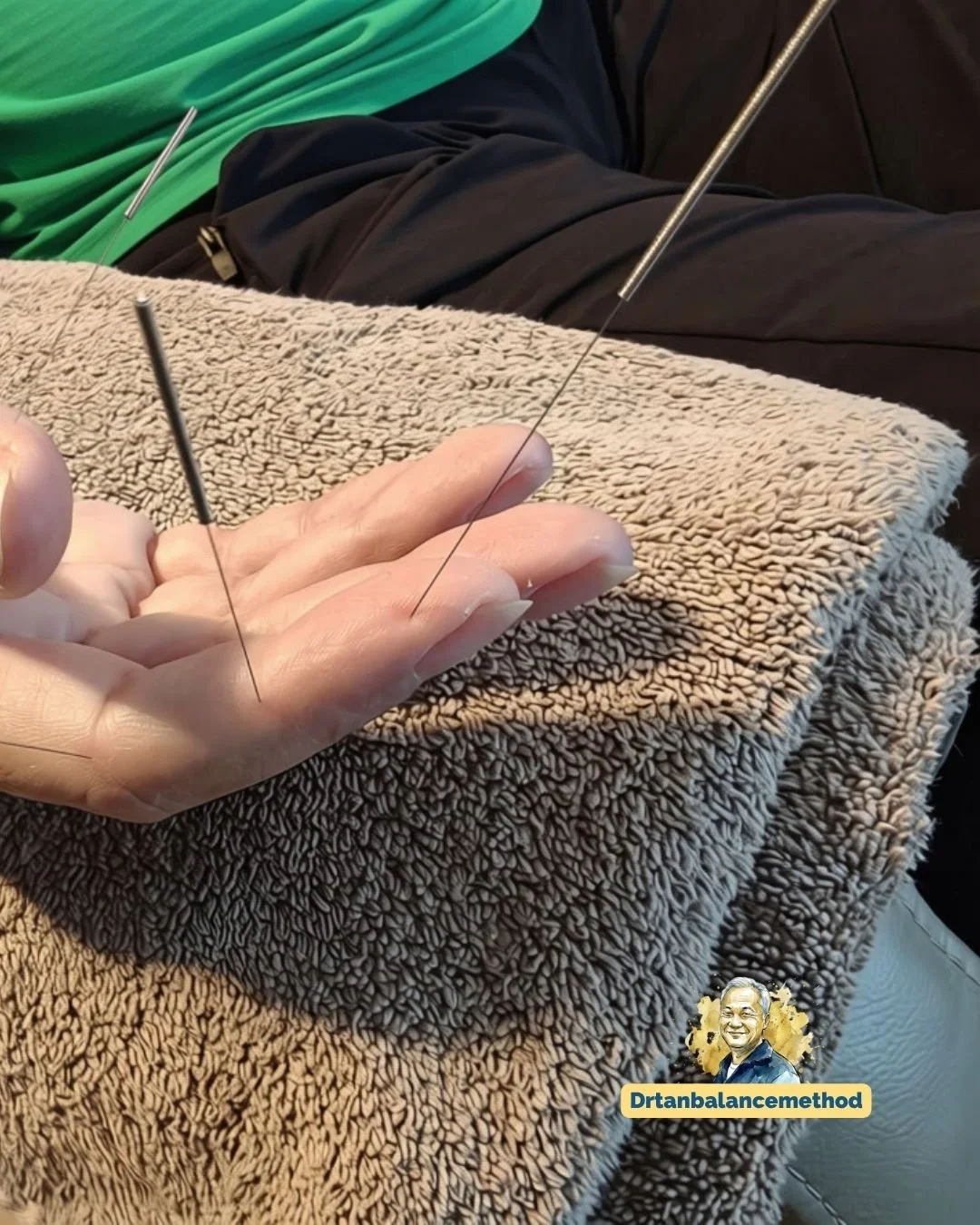
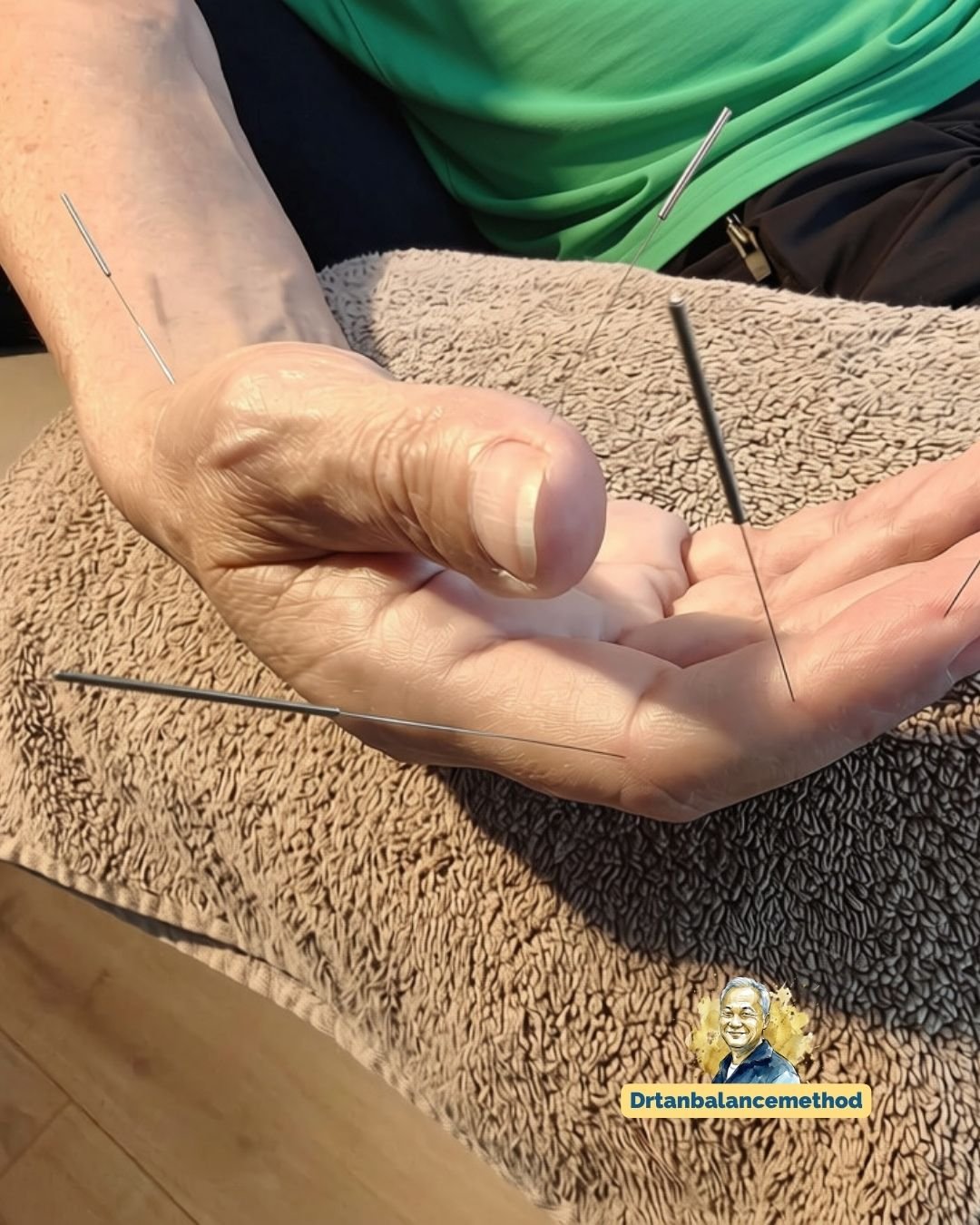
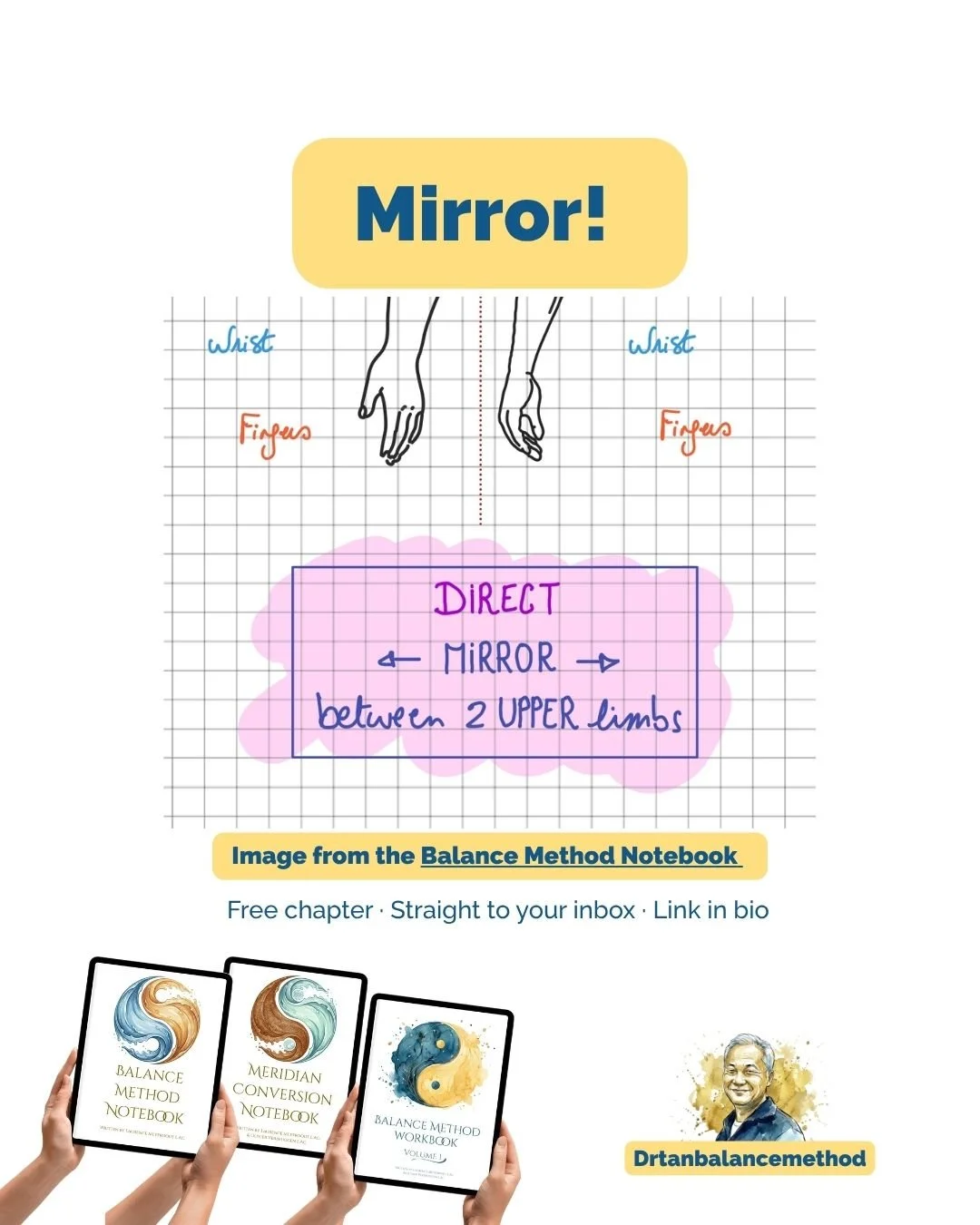
For the neck we used the Direct Puppet Show Image, where the wrist stands for the neck: LU 9, right side. For the thumb, the right index finger with a direct mirror, joint for joint — the tip and the first and second phalangeal joint, matching the painful joints of the thumb one for one. Shallow, at the level the joint actually sits. For the projection logic underneath both of these, see Mirroring and Imaging in the Balance Method.
Then a re-evaluation, and this is the part of the case that teaches. The thumb pain had quietly settled. LU 9 had released the tension in the neck. The headache had not moved at all.
So we added LU 11 on the same right hand, this time on the direct small puppet hand image — a second projection, not a second point on the first one. Here the fingertip stands for the top of the head, where the Urinary Bladder meridian crosses on its way to UB 2. The headache went with it. By the end of the session the neck felt relaxed and the headache had gone.
Outcome
Two timelines, and they are not the same one. The neck and the headache were resolved after two sessions. The thumb needed four.
That gap is worth keeping in the write-up rather than smoothing over. The Urinary Bladder complaints answered quickly once both stations were covered; the joint at the thumb, loaded night after night, took twice as long to stay clear. Reporting one number for the whole case would have described neither half accurately.
We also asked her to put the diamond painting aside for a while, so the overloaded joint had room to recover. That instruction is part of the result, not a footnote to it.
The Insight: One Meridian Is Not One Zone
The neck and the headache were the same meridian. UB 10 at the base of the skull and UB 2 at the eyebrow are two ends of one continuous stretch, and it is easy to write that down as a single sick meridian and then expect a single balancing point to answer for all of it.
It did not. LU 9 freed the neck and left the head untouched. Nothing was wrong with the diagnosis and nothing was wrong with the system . Reaching the other points of that Urinary Bladder stretch took a second projection on the same meridian, the small hand image, where the fingertip carries the head.
Adding LU 11 was not a correction. It was the second half of the same plan, and it only became visible because we checked what had changed before deciding the session was finished. The meridian tells you which territory to work in. The image decides which part of that territory you actually land on — and one balancing meridian can carry more than one image.
What to Watch For With Two-Image Cases
1. Treating one meridian as one complaint
A stretch from the neck to the eyebrow is one meridian and several zones. Write down where the complaint starts and where it ends, then ask of every point you place how much of that distance it covers. One name on the map does not mean one needle.
2. Matching the meridian but not the tissue
The neck was muscle and tendon and the thumb was joint, and the two ask for different work. Joint for joint on the index finger, at the depth a finger joint sits, is not the same treatment as releasing a muscle attachment. Get the system right and the tissue wrong, and the needle lands in the correct place doing the wrong job.
3. Closing the session when the first complaint clears
The neck let go on the table. Had that been the moment to stop, the patient would have gone home with the headache she came in with. Re-check every complaint separately before you finish, especially the quieter one that was never the reason she booked.
Apply This in Your Practice
Ask what the hands have been doing in the evenings. Hobbies produce load histories that patients do not think to mention, because nothing hurt while they were enjoying it. A sustained pinch grip and a forward-held head come from the same craft table and turn up as two unrelated-looking complaints.
Let the sides decide the system before the point does. A bilateral complaint does not need two limbs: System 2 needles either side, which turns two sides of the neck and two sides of the head into one hand's work. A one-sided complaint can take an opposite-side system without paying for it. Read the sides of every complaint first, and a session that looked like it needed both arms often collapses onto one.
Map every complaint on its own, even when one meridian carries two of them. Note the extent, not only the name. Diagnosing the sick meridian answers where; how far along it the complaint runs is a second question, and it changes the point selection.
Match the joint as precisely as you match the meridian. Joint for joint, tip for tip, at the depth the structure sits. On a finger that is a small margin, and it is the difference between a mirror and an approximation.
Re-check between needles and treat what has not moved. The information you need for the next point is produced by the last one. Here it took one question — and the head is what was still there.
Quick Reference: This Case
- Left thumb, Lung meridian, tip and first and second phalangeal joint · joint · 7/10
- Bilateral neck and head, Urinary Bladder meridian, UB 10 up to UB 2 · muscle
- Local Balance · UB to Lung by System 2 (either side) · Lung to LI by System 3 (opposite side)
- Puppet Show Image, wrist for neck → LU 9 · direct mirror, joint for joint → right index finger
- Headache unmoved → LU 11 on the small hand image, fingertip for the crown
- Every needle on the right hand · neck and head clear after 2 sessions, thumb after 4
Note: Patient details have been adapted from comparable cases in our clinic to protect privacy. This post is for educational purposes only — for acupuncturists and interested professionals. Not treatment advice or a substitute for professional consultation.
Every System, Every Projection, Every Pattern at Your Treatment Table
Start with the free chapter and see how the reference works in the clinic.
Foundation · 600+ pages
Balance Method Notebook
The complete Local and Global Balance reference, hand-drawn for the treatment table.
Specialization · 500+ pages
Meridian Conversion Notebook
Beyond pathway treatment: calm the Shen, balance hormones, work with depression, addiction and insomnia.
Free chapter · Straight to your inbox
Next Steps
This case applies foundational concepts from our pillar guides. To go deeper:
For the projection logic behind both halves of this case: Mirroring and Imaging in the Balance Method
For the systems behind Step 2: the 6 Systems explained
For the Lung meridian reaching the neck at another level: the LU 7 needling demo for neck pain
For the full headache territory and when it stops being local: headache and migraine with the Balance Method
For a second complaint that surfaced mid-session on the hand: our hand pain case study
For every sick meridian and its balancing options in one place: the complete matrix as a printable PDF chart
To discuss cases with colleagues worldwide: the Practitioner Community
New to the terminology? See the Balance Method Glossary for every core term in one place.
