
What do you do when a patient has no trouble falling asleep, wakes in the night, and cannot switch her mind off again? Insomnia like this is not one complaint but several, and this case is about reading the sleep before reaching for a pattern: listen to when she wakes and what she wakes into, choose the pattern that carries that whole picture, then convert instead of project. If you're new to Dr. Tan's approach, read first how the Balance Method works.
A 52-year-old woman comes to our clinic with a mind that will not stop. She plans other people's weddings for a living, which means she spends her working days a year and a half ahead of everybody else in the room. Nervous, hyperactive, and completely worn out. Falling asleep was never the problem. Staying asleep was — she surfaces in the night and the planning starts again. Let's map it.
When the complaint is a Shen picture rather than a place, you stop asking where it sits and start asking what shape it takes. Here that shape came out of two questions about her sleep, and the pattern followed from the answers — with a second layer underneath it for the exhaustion she walked in with.
Patient Profile
| Age | 52-year-old female |
| Complaint | Waking in the night, nervousness, hyperactivity and exhaustion — no pain anywhere |
| Meridians involved | Liver, Stomach, Large Intestine and Pericardium (with Kidney) |
| Pattern | Global Balance — Jue Yin Yang Ming (Shen) |
| Approach | Meridian Conversion, first and fourth Yao — eight points, plus a Five Element Kidney layer |
Why Insomnia Is a Shen Case
Nothing in this case can be palpated. Insomnia arrives in the clinic as one word and splits into several patterns the moment you ask two questions. There is no spot that hurts, no line that lights up, no side to compare against the other. What the patient describes is how her mind behaves and how tired she is, and neither of those sits on a pathway.
Here's the temptation: translate the complaint into an element and let the element pick the pattern. Overthinking sounds like Earth, so the Earth patterns come to mind, and one of them will look close enough. It won't hold. A Shen complaint is not diagnosed by naming the emotion. It is diagnosed by the shape the emotion takes — and where sleep is involved, that shape is remarkably specific. When does she wake? What is she awake with? Answer those two questions honestly and the pattern has usually chosen itself. For the decision that sits one level above this one, see our guide on Global vs Local Balance.
The Treatment
Step 1: Read the sleep
There was nothing to map in the usual sense, so we read the sleep instead. She had no trouble falling asleep. The trouble was staying asleep: a light, alert sleep that broke easily. And once awake, her mind ran forward — tomorrow, next week, next season — never back over the day that had passed. Nervous, hyperactive, and underneath all of it, genuinely worn out.
Three details, and each one carries weight. Waking rather than not falling asleep. Worrying forward rather than turning over the past. And a fatigue sitting underneath a body that could not settle. That's the map. Let's go.
Step 2: Choose the pattern
That sleep picture belongs to Jue Yin Yang Ming: Liver and Pericardium in the Jue Yin, Stomach and Large Intestine in the Yang Ming. It is the hyper-alert front pattern. Superficial sleep that any small stimulus interrupts, worry pointed at what is coming rather than at what has been, and the scheduling stress that travels with it.
Then the question of tool. Projection reaches a pathway, and she did not have one. She had a function and a Shen, and Meridian Conversion is what reaches those.
Step 3: Needle
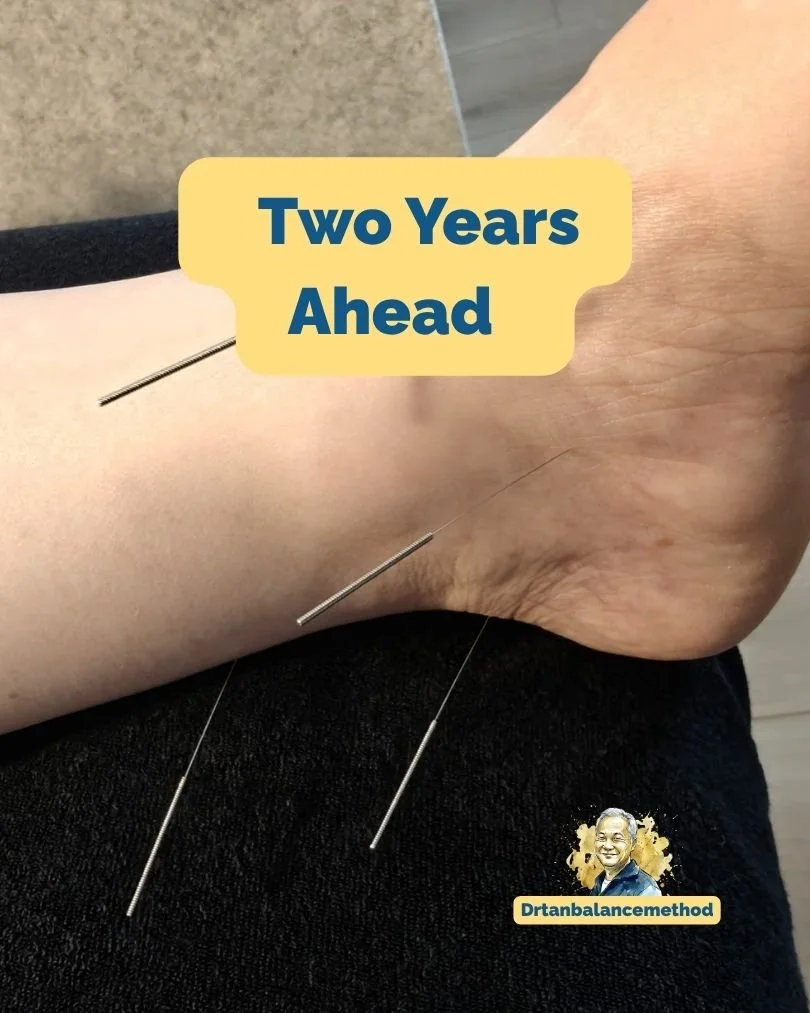
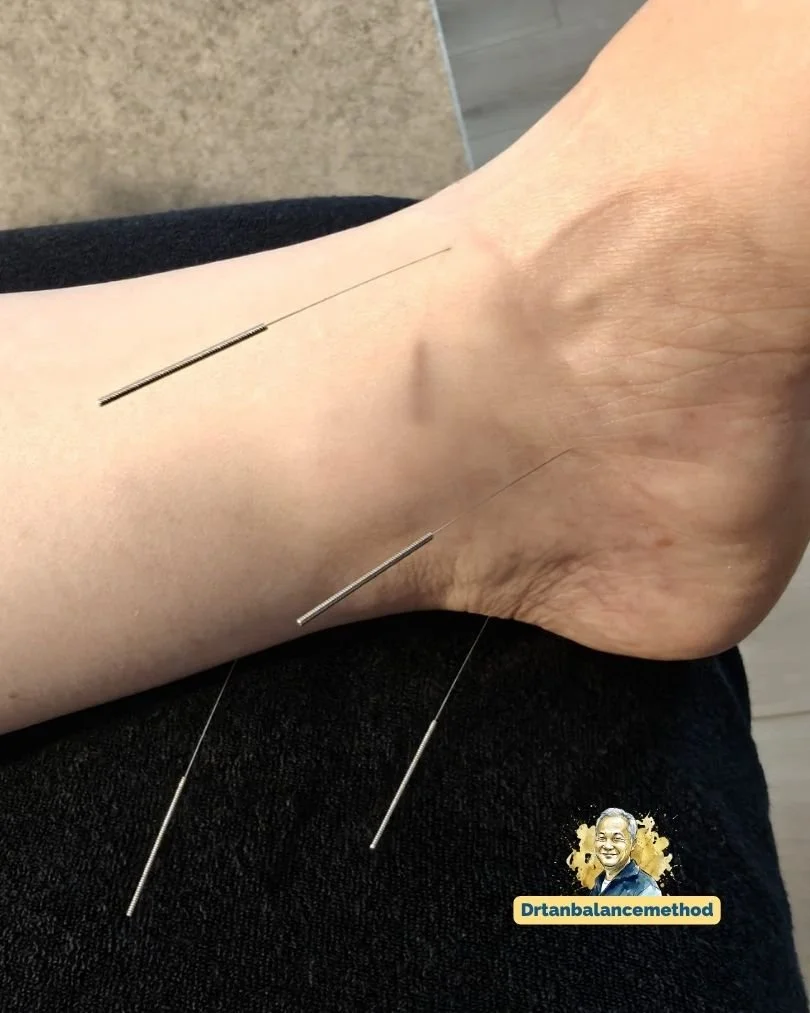
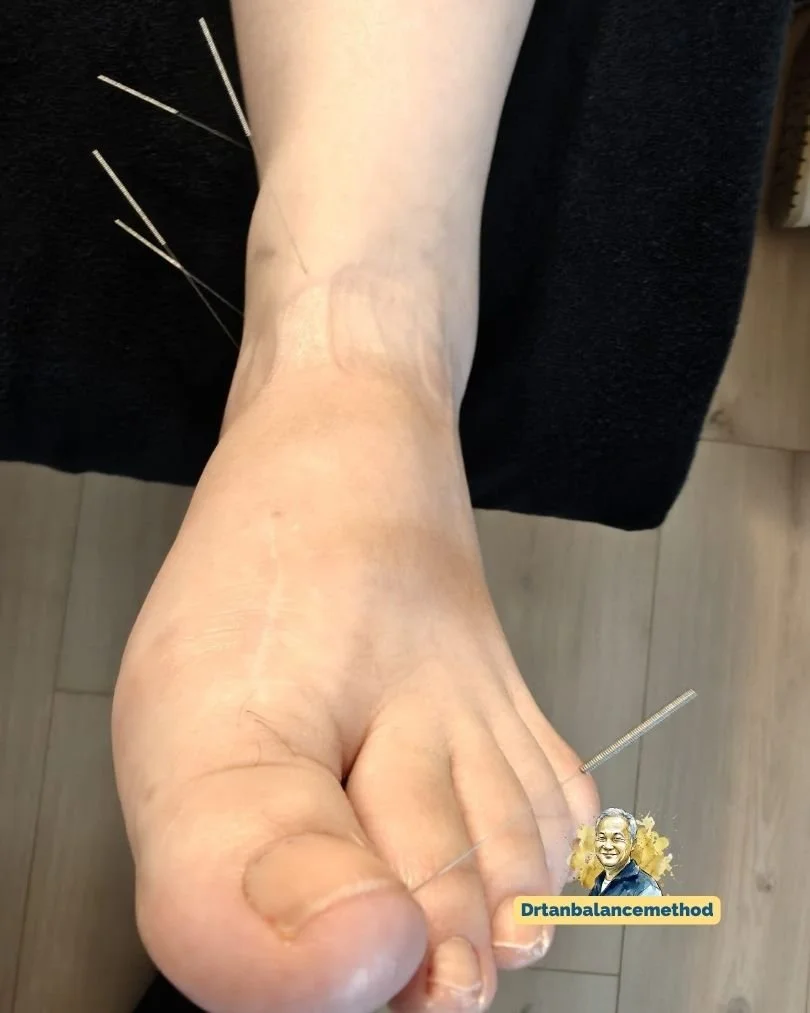
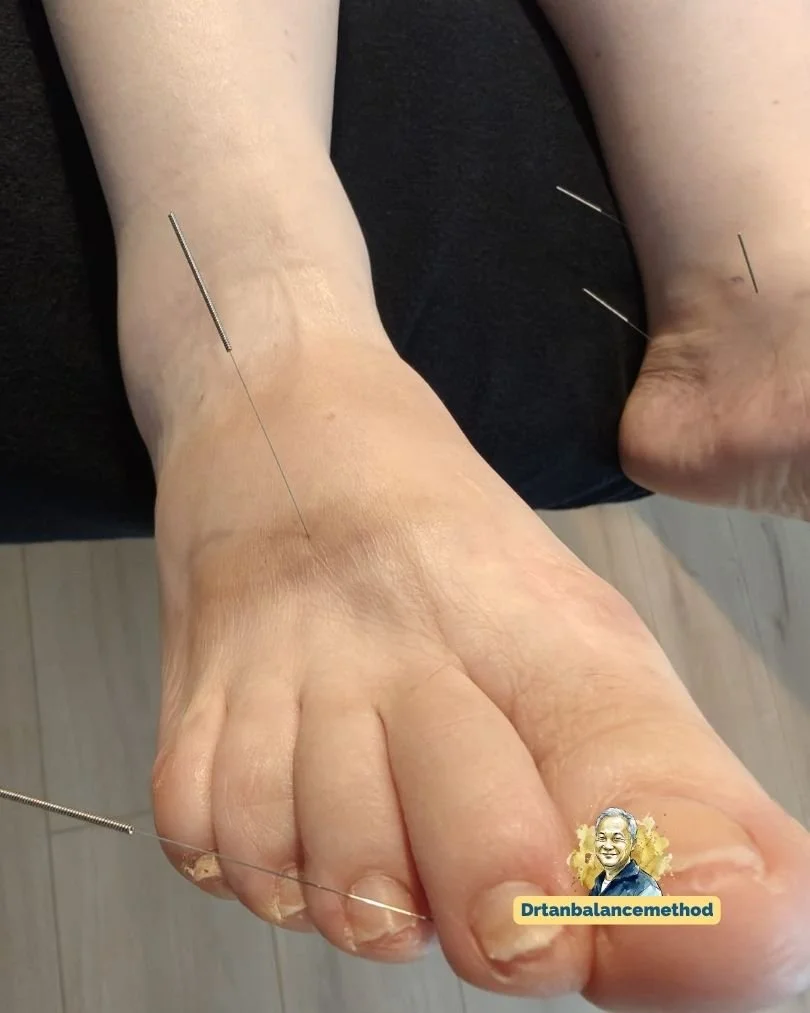
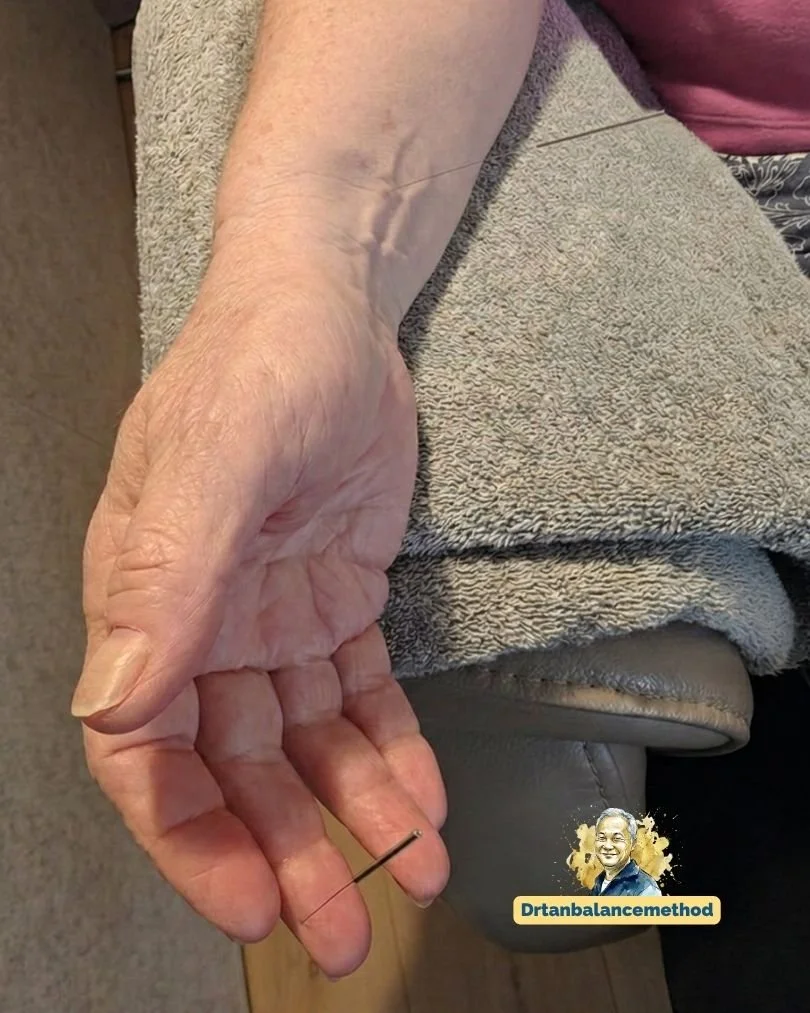
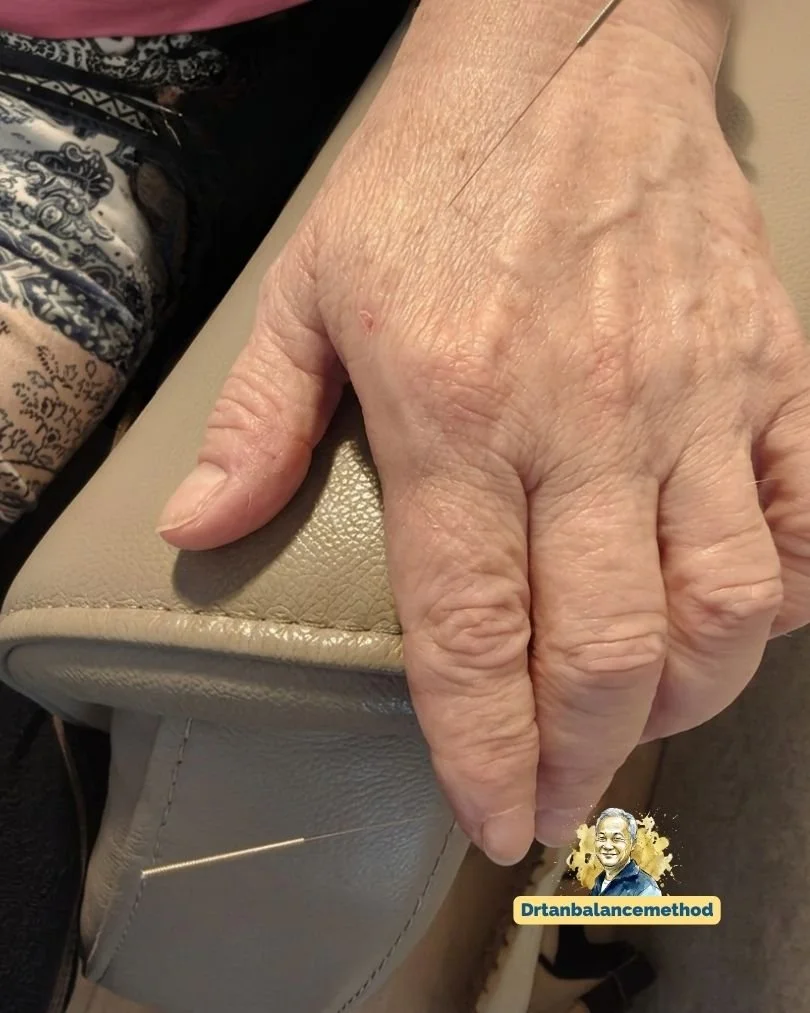
Meridian Conversion on the first and fourth Yao. On each of the four meridians, comparing the meridian's own gua against its destination gua leaves two lines to change: the first and the fourth. Eight points in total, all of them down in the extremities.
Liver 1 and Liver 4. Pericardium 9 and Pericardium 6. Stomach 45 and Stomach 42. Large Intestine 1 and Large Intestine 4.
Then a second layer, alongside the pattern rather than inside it: Kid 2, Kid 4 and Kid 7. Those three fall out of converting the Kidney meridian to gua 62, the water-tonifying picture, and they are in the treatment for the exhaustion underneath — not for the sleep on top of it.
One pattern for what kept her awake. Three points for what kept her tired.
Outcome
After four sessions she slept through the night again and told us she woke up rested, a little more so with each passing day. The nervous edge had softened, and things that used to feel enormous were easier to put back in proportion.
By ten sessions she described herself as feeling completely well. She still drops in occasionally, when she notices the overthinking starting up again or feels the old complaints returning. That is her own read on her own state, and we report it as that rather than turning it into something we claim.
Two timelines are worth keeping apart. The sleep changed early, around session four. The rest of the picture took ten. A Shen case rarely resolves in one straight downward line, and writing it up as though it did would misrepresent what these treatments actually ask of a patient.
The Insight: Excess Sitting On Top of Deficiency
Exhaustion invites a reflex, and the reflex is to read it as deficiency and tonify. Often that is right. Here it was only half right.
A patient can be genuinely deficient underneath and still be far too tight for the body to rest. The tension on the outside means the sleep does not get taken in, however many hours of it there are. So the excess comes off first, and only then does what you add underneath have somewhere to land. Order matters, and it is not interchangeable.
Which is why this case is not a choice between two diagnoses. She was both at once. Calm the front alone and she would have been quieter with nothing left to run on. Feed the Kidney alone and she would have been fed while still too wired to use it. The Global Balance pattern handled the first half, and Kid 2, Kid 4 and Kid 7 handled the second. Neither half would have carried the case on its own.
What to Watch For With Shen Cases
1. Naming the emotion instead of reading its shape
"Overthinking" is a word, not a diagnosis. Two patients can both describe a mind that will not stop at night and belong to completely different patterns. What separates them is the shape: when they wake, what they wake into, and whether there is worry in it or only activity. Ask for the shape before you reach for a pattern.
2. Reading tiredness as deficiency and stopping there
A tired patient is not automatically only a deficient patient. Tightness produces its own exhaustion, and it can sit on top of a real deficiency at the same time. Check whether the body is actually able to rest before you decide that all it needs is filling.
3. Turning the patient's report into a claim
"She feels like herself again" is the patient's experience and belongs to her. It is worth recording exactly as she said it. It is not evidence of anything beyond that, and a Shen case is precisely where the temptation to overstate is strongest.
Apply This in Your Practice
Ask when they wake, not only whether they sleep. Difficulty falling asleep and difficulty staying asleep point in different directions, and so does waking with worry versus waking with plans. Those two questions do more diagnostic work than any amount of description about stress.
Let the picture choose the pattern, not the element. Translating a complaint straight into Wood, Earth or Fire feels rigorous and quietly skips the step that matters. Build the picture first; the element will be in it.
Release before you fill. When excess and deficiency sit on top of each other, treating the excess first is what makes the tonifying layer usable. Both halves in one session is fine — but know which one is doing which job.
Decide what you will track before you start. A pain case hands you a number. A Shen case does not, so pick your markers at the first session and let the patient name them: how she wakes, what she wakes into, how long it takes before she is back asleep. Without that, you have no way to tell progress from a good week.
Quick Reference: This Case
- No pain — waking in the night, worry about what is coming, nervousness, hyperactivity, exhaustion
- Shen picture, not a pathway → Global Balance, Jue Yin Yang Ming (Liver, Pericardium, Stomach, Large Intestine)
- Meridian Conversion, first and fourth Yao → eight points, all in the extremities
- LIV 1/4 · PC 9/6 · ST 45/42 · LI 1/4
- Five Element layer for the exhaustion: Kid 2, Kid 4, Kid 7 (Kidney converted to gua 62)
- Sleeping through by session 4 · patient reports feeling completely well by session 10
Note: Patient details have been adapted from comparable cases in our clinic to protect privacy. This post is for educational purposes only — for acupuncturists and interested professionals. Not treatment advice or a substitute for professional consultation.
Every System, Every Projection, Every Pattern at Your Treatment Table
Start with the free chapter and see how the reference works in the clinic.
Foundation · 600+ pages
Balance Method Notebook
The complete Local and Global Balance reference, hand-drawn for the treatment table.
Specialization · 500+ pages
Meridian Conversion Notebook
Beyond pathway treatment: calm the Shen, balance hormones, work with depression, addiction and insomnia.
Free chapter · Straight to your inbox
Next Steps
This case applies foundational concepts from our pillar guides. To go deeper:
For the method behind this case: Meridian Conversion explained
For choosing between one region and the whole pattern: Global vs Local Balance
For the systems framework underneath every pattern: the 6 Systems explained
For a second case with no pain to map: our kidney function case study
For the point that opens this pattern at the foot: the Stomach 42 needling demo
For the complete system at the table: the Dr. Tan Balance Method chart as a free PDF download
To discuss cases with colleagues worldwide: the Practitioner Community
New to the terminology? See the Balance Method Glossary for every core term in one place.
