
Liv-4 Balance Method Video Guide: The secret for stubborn hip and wrist pain
The "internal" secret for stubborn hip and wrist pain. LIV-4 (Liver 4) is your essential move for clearing pain in the hip and balancing the wrists.
LIV-4 is your structural mirror for stubborn wrist and hip pain that refuses local treatment. This powerful Balance Method point requires precise tendon identification and depth matching to get consistent results across six different systems.
In this 16-second demo, you'll see the exact ankle location, the foot flexion technique that makes the tibialis anterior tendon visible, and why matching needle depth to symptom depth determines success or failure.
Quick Stats
Video Duration: 15 seconds
Key Conditions: Ankle pain, hip pain, wrist pain, digestive issues, emotional oppression, male genitals
Alternative Names: Zhongfeng, Middle Seal
Balance Method LIV-4 Logic
Here's the deal: LIV-4 isn't about "moving Liver Qi." In the Dr. Tan Balance Method, the Liver channel is a master balancer for the Gallbladder and Small Intestine channels. By targeting this point on the ankle, you're using the body's holographic mirror to switch off pain in the wrist or hip. It's a precise, structural correction that works across multiple systems.
Watch: The Full LIV-4 Needling Demo here
Needling demo Dr. Tan’s Balance Method Liv 4 in the tendon.
LIV-4 Treatment Applications (Systems 1-6)
One point on the ankle, 6 different clinical ways to win.
(Every Liver channel protocol and pairing is mapped step-by-step in The Balance Method Notebook—grab it here for the complete breakdown.)
System 1: Pericardium (PC)
Treats: Opposite wrist pain, shoulder
System 2: Large Intestine (LI)
Treats: Either side wrist, shoulder, throat, face
System 3: Gallbladder (GB)
Treats: Opposite ankle, hip pain, neck pain, face
System 4: Small Intestine (SI)
Treats: Either side wrist, shoulder, neck
System 5: Lung (LU)
Treats: Opposite wrist, shoulder
System 6: Liver (Liv)
Treats: Either side ankle, lower abdominal pain
Balance Method LIV-4 TENDON Protocol
Follow this step-by-step to ensure your treatment "takes" immediately.
Location
Find the medial side of the ankle. LIV-4 is located anterior to the medial malleolus, in the depression on the medial side of the tibialis anterior tendon.
Pro Tip: Have the patient flex their foot upward—the tendon will pop out, making it easy to find.
Which Side
For tendon pain on the LIVER meridian, always needle the opposite side of the pain (contra-lateral).
Depth (Matching Principle)
Use the depth matching principle.
Is it surface-level tendonitis? Stay shallow.
Is it deep, joint-level ankle pain? Go deeper into the depression (not needling the tendon).
Retention
Always leave the needles for 45 minutes.
Immediate Check
Have the patient move their wrist or foot or move their body right away. If the pain hasn't dropped by at least 20-50%, adjust your depth.
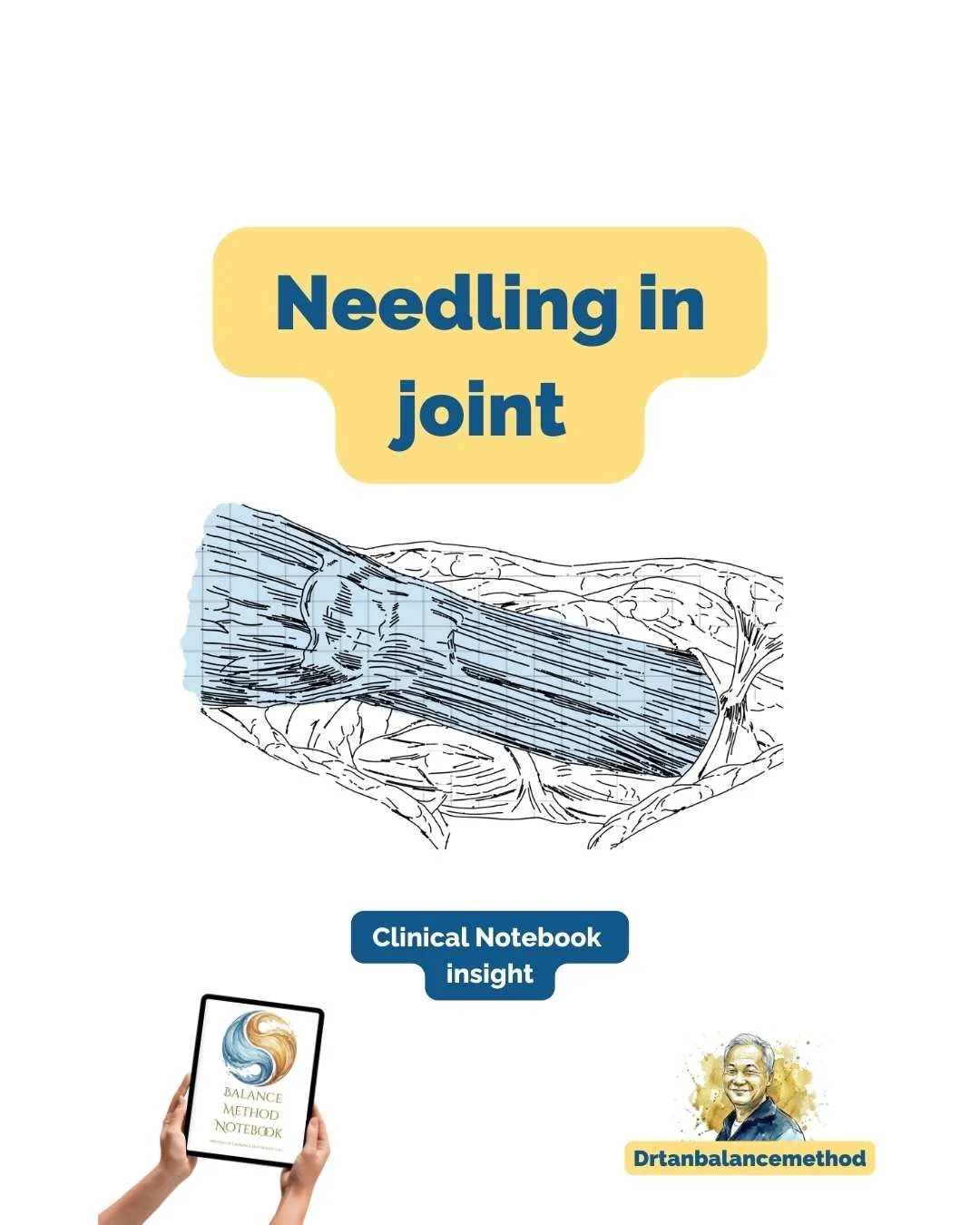
Illustration of tendon identification and depth matching technique
What You'll See (Expected Results)
Immediate (on the table): You should see a noticeable increase in range of motion in the opposite wrist or ankle.
1-3 Sessions: Acute pain cases typically see the most dramatic shifts here.
4-7 Sessions: The standard timeframe for stabilizing chronic structural imbalances.
Watch Out For (Safety & Mistakes)
The Tendon: Needle directly into the tibialis anterior tendon if necessary for depth matching; if not, stay in the soft hollow medial to it.
Common Mistake: Needling too shallow. Many practitioners stay in the skin, but for deep joint pain, you need to reach the depth of the symptom.
Reassess Now: If you don't get a result, don't wait. Re-palpate and check your system choice.
Want More?
Full Balance Method Notebook: Complete depth matching explanation and all Liver channel protocols
Get The Balance Method Notebook →
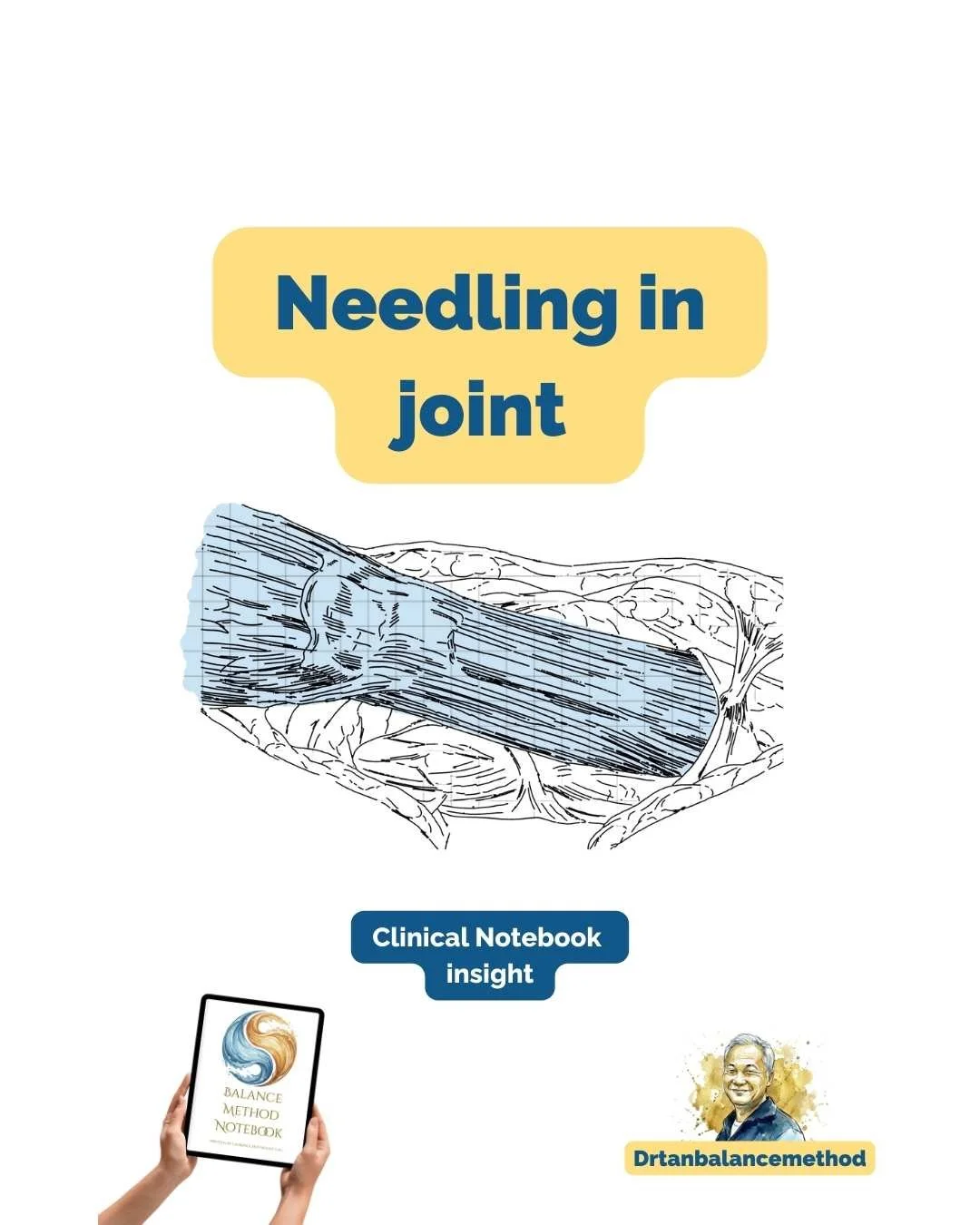

Caption: Full in-depth explanation of depth matching principles: Stop searching, start treating: Your go-to Balance Method resource
Related techniques:SI-4 for lateral foot pain and KID-3 for deep structural issues
New to the Balance Method?
Start with the basics in our complete guide or master the system through official training with the direct students of Dr. Tan.
To get clinical results like this every day, join our Global Community to discuss cases with experts, and grab your copy of The Balance Method Notebook to unlock every treatment combination.
Have you used LIV-4 for wrist pain yet? The results are usually instant—drop your clinical wins in the comments!
Go Deeper
Watch the LIV-4 needlinGo Deeper
Watch the LIV-4 needling demo, flexion trick included, on our video page.
Liv 4 can also be needled with a different technique for a different complaint: see the deep well technique for deep hip pain.
Find Liver's balancing partners in the Balance Method matrix chart.
Look up any unfamiliar term in the Balance Method glossary.
