
Mastering SJ-3.5: Dr. Tan’s Balance Method Protocol & Video Demo
The "hidden" key for GB-style back pain. SJ-3.5 (San Jiao 3.5) is your go-to move when back pain starts radiating toward the lateral (GB) side.
SJ-3.5 is a prime example of how the Dr. Tan Balance Method uses unconventional, "fragmented" meridian points to map the body with extreme precision. Part of the legendary "Lingu combo (Master Tung)," this point is specifically designed to target back pain that shifts toward the lateral side of the trunk.
By needling between traditional points, you hit the exact holographic mirror for the Gallbladder meridian.
Quick Stats
Video Duration: 11 seconds
Key Conditions: Lower back pain (GB-style), shoulder tension, eye issues, neck pain
Alternative Names: Part of Lingu combo point (Master Tung)
Balance Method SJ-3.5 Logic
Look, here's the deal: this isn't your typical TCM approach. In the Dr. Tan Balance Method, we often fragment meridian points in unconventional ways to map the body more precisely. SJ-3.5 is a prime example—it's part of a "Lingu combo" specifically designed to target back pain that shifts toward the lateral (GB) side. By needling between the traditional points, you're hitting the exact holographic mirror for the GB meridian.
Watch: The Full SJ-3.5 Needling Demo
Needling San Jiao 3.5 (SJ 3.5) for lower backpain. Dr. Tan Balance Method Acupuncture
SJ-3.5 Treatment Applications (Systems 1-6)
This point works across all 6 systems to balance several meridians. (See how Dr. Tan mapped these unconventional points for maximum clinical impact in the Balance Method Notebook—grab it here.)
System 1: GB (Gallbladder)
Treats: Opposite side trunk pain, above the eye pain, foot pain, leg pain
System 2: Kid (Kidney)
Treats: Either side belly pain, foot pain, leg pain
System 3: PC (Pericardium)
Treats: Opposite side hand pain, arm pain
System 4: SP (Spleen)
Treats: Either side chest pain, abdominal issues, foot pain
System 5: GB (Gallbladder)
Treats: Opposite side trunk pain, above the eye pain, foot pain, leg pain
System 6: SJ (San Jiao)
Treats: Either side hand pain, arm pain
Balance Method SJ-3.5 Protocol
Follow these steps for the unconventional "Dr. Tan" approach.
Location:
Found between SJ-3 and SJ-4 on the dorsum of the hand.
Pro Tip: Have the patient make a loose fist to make the space between the 4th and 5th metacarpal bones more accessible.
Which Side:
Use the side that best aligns with your system choice.
Depth (ASS):
Follow the ASS principle. If the pain is deep in the muscle or near the bone, your needle must reach that corresponding depth in the hand.
Retention:
Always leave the needles for 45 minutes.
Immediate Check:
Have the patient move their back immediately. If that GB pain isn't fading, your depth is off.
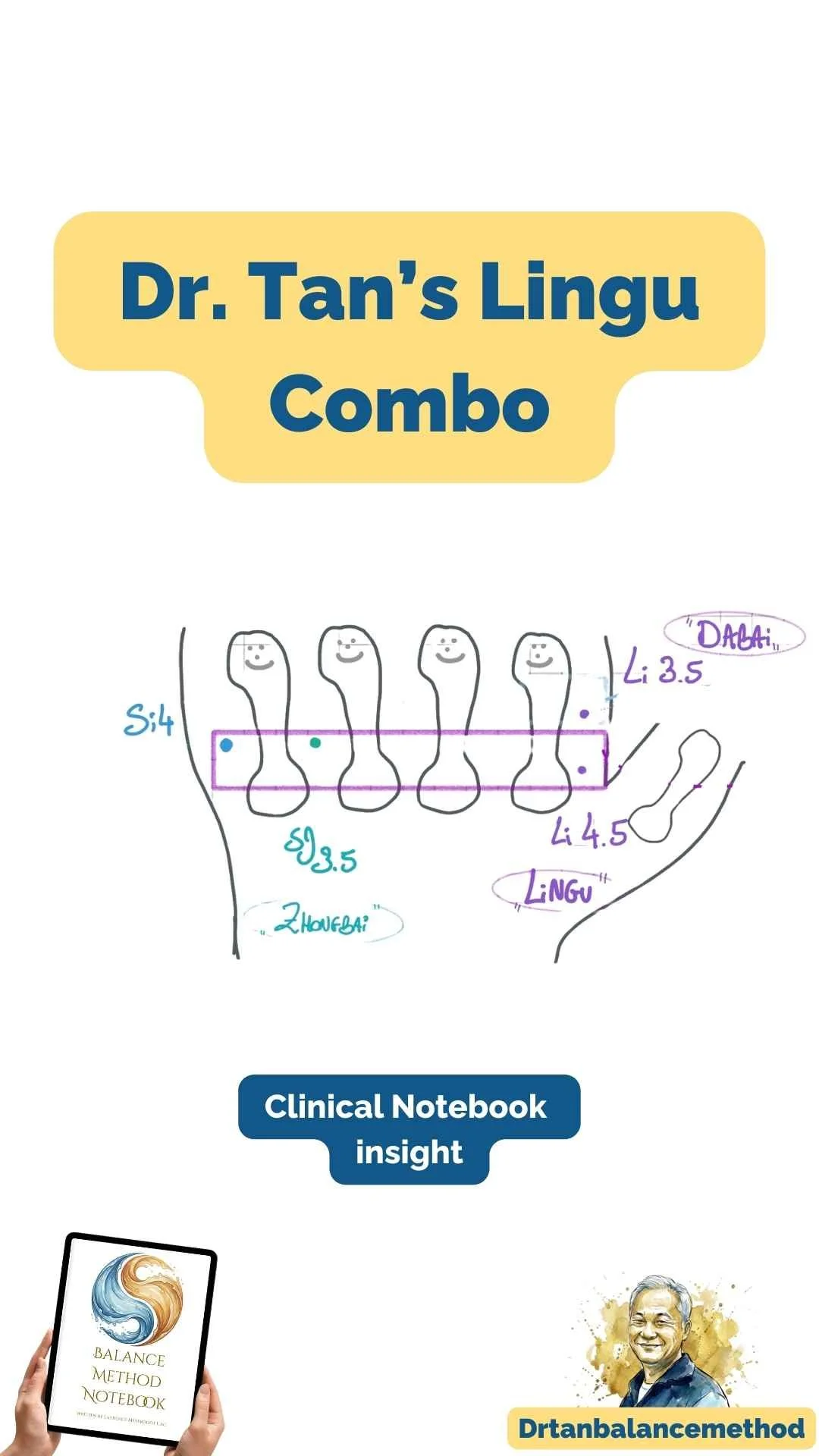
Full anatomical illustration of Dr. Tan’s Lingu Combo
What You'll See (Expected Results)
Immediate (on the table): A reduction in the "pulling" sensation that goes from the back toward the side of the trunk.
1-3 Sessions: Acute flare-ups of lateral back pain typically stabilize here.
4-7 Sessions: The standard timeframe for long-term resolution of chronic patterns.
Watch Out For (Safety & Mistakes)
The "TCM Trap": Don't get stuck only on the standard SJ-3 or SJ-4 locations. Dr. Tan fragmented these points for a reason—find the exact spot that mirrors the pain.
Metacarpal Bones: Be careful not to needle harshly onto the bone; move slowly.
Reassess Now: If the pain doesn't shift, don't wait. Re-palpate for a more active spot between the bones.
Want More?
Full Balance Method Notebook: Understanding fragmented meridians and why Dr. Tan moved away from traditional point locations
Get The Balance Method Notebook →
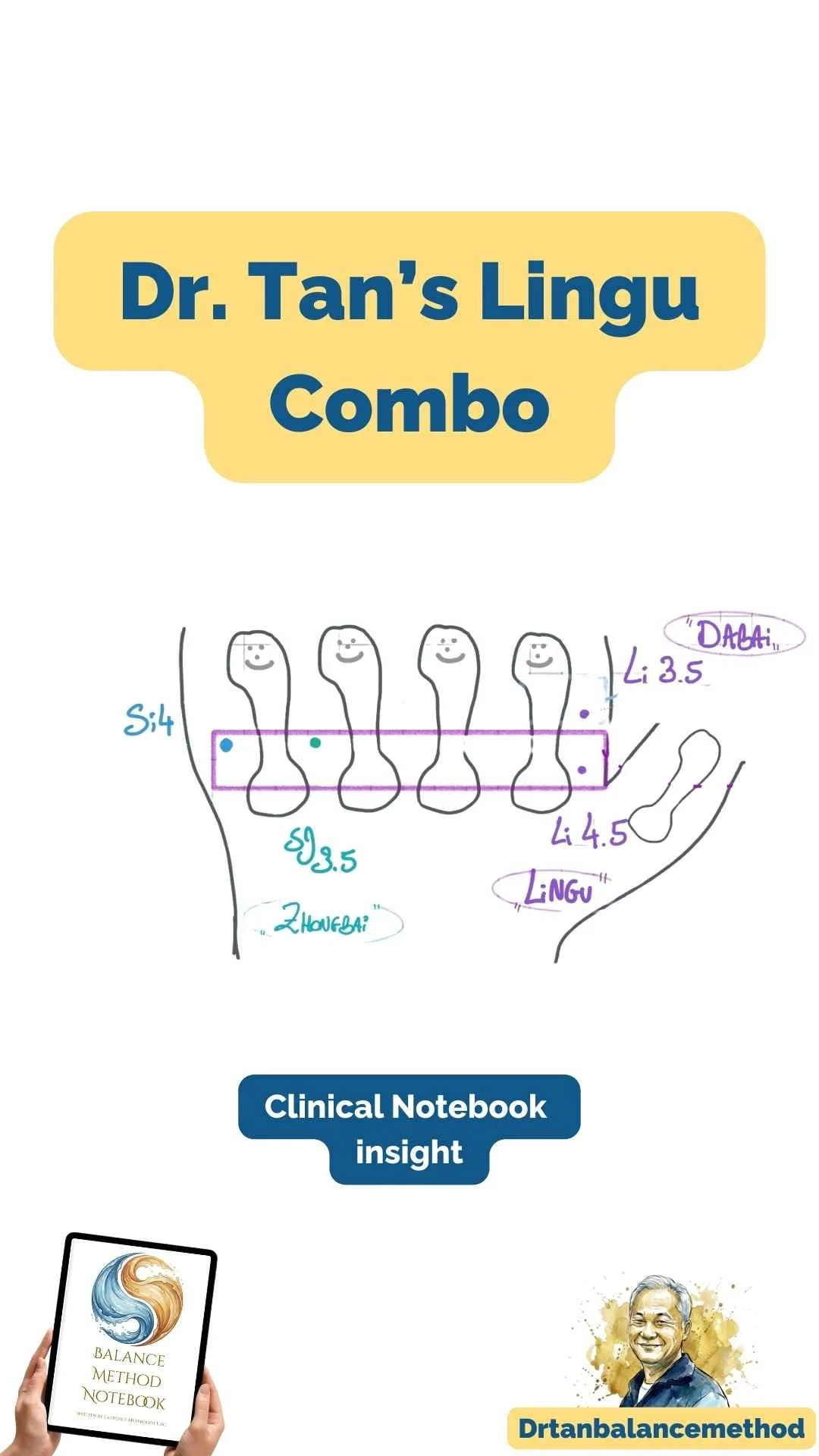

Caption: Full in-depth explanation of Dr. Tan’s projections within the Lingu Combo, part of Dr. Tan’s 1 million dollar for lower backpain in the Balance Method Notebook : Stop searching, start treating: Your go-to Balance Method resource.
Watch:SI-4 as part of Dr. Tan's Lingu combo (perfect partner for comprehensive back relief)
New to the Balance Method?
Start with the basics in our complete guide or master the system through official training with the direct students of Dr. Tan.
To get clinical results like this every day, join our Global Community to discuss cases with experts, and grab your copy of The Balance Method Notebook to unlock every treatment combination.
Have you used SJ-3.5 for back pain that radiates to the side? The results are usually instant—drop your clinical wins in the comments!
Go Deeper
See the SJ-3.5 needling demo in action on our video page.
Lateral back pain along the Gallbladder line? Our guide to back pain and sciatica walks through the full approach.
Look up which meridians balance San Jiao in the Balance Method matrix chart.
New to terms like fragmented point? The Balance Method glossary explains them.
