
Laurent Turlin on Dr. Tan's Balance Method: Pain Is Only the Entrance Door
Some practitioners add the Balance Method to what they already do. Others let it reorganise everything. Laurent Turlin had already trained in Chinese internal medicine, Chinese herbal medicine, homeopathy, naturopathy, scientific aromatherapy and auriculotherapy before he ever sat in his first Balance Method course — and when he finally did, in 2018, he took the rest of it apart and rebuilt his practice around this one system. What followed was a doctorate, a clinic in Paris, books written for the general public, and a deck of sixty acupressure cards he now puts straight into his patients' hands. We're glad to introduce him as an official Balance Method ambassador, and the conversation Laurence had with him is one of the warmest we've recorded.
Who is Laurent Turlin?
Laurent Turlin is an acupuncturist and naturopathic doctor who works on his own in his clinic in Paris. He came to the Balance Method after decades in Chinese medicine, and he now builds almost everything he does around it:
- →More than 30 years in Chinese medicine, with a first encounter with Dr. Tan's work in 2011 and his first Balance Method course in 2018.
- →A PhD in naturopathy obtained in Canada — six years of research and two years of writing — with Balance Method acupuncture as one of the pillars of the approach he defends in it.
- →Books written for the general public, including the large illustrated volume he calls his “Bible” of the points that heal.
- →A deck of sixty acupressure cards, published in French, made to be used by patients at home.
You can find his work at laurent-turlin.fr.
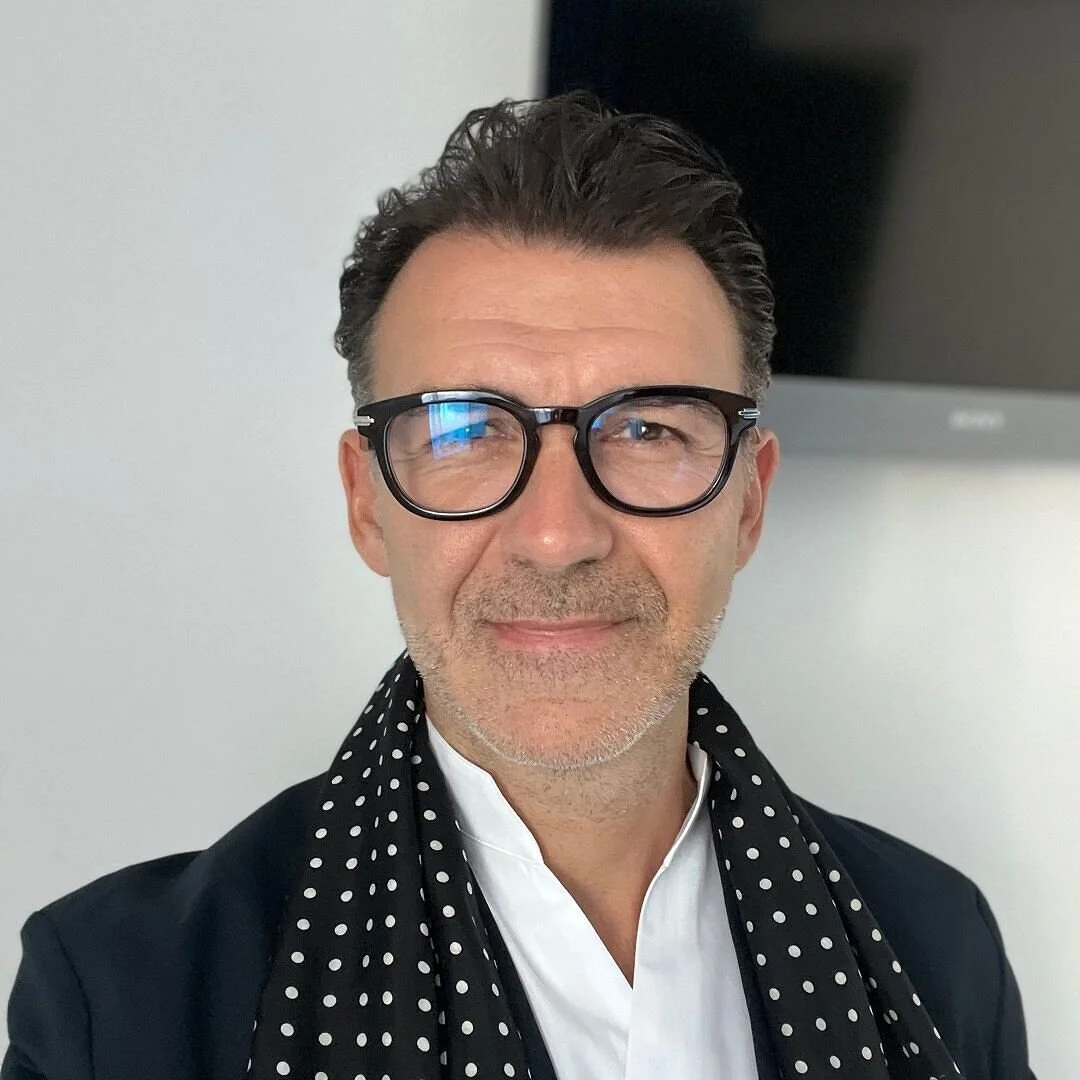
Laurent Turlin, acupuncturist and Balance Method ambassador
The method that reorganised everything
Laurent first came across Dr. Tan's work in 2011. He couldn't start there — his schedule didn't fit the courses that were running at the time — but the impression stayed with him. “I immediately felt that there was something deeply different,” he says: precise logic, often rapid results, and a much more dynamic understanding of the meridians.
So he kept practising, and he kept looking. Chinese internal medicine, Chinese herbal medicine, homeopathy, naturopathy, scientific aromatherapy, auriculotherapy — he trained in all of it. And honestly, he says, traditional Chinese acupuncture as he had been taught it often felt “too limited, too slow,” or not adapted enough to the clinical situations sitting in front of him.
In 2018 he took his first Balance Method course, and that changed everything. “I understood that the Balance Method could become the backbone of my practice,” he says — “a method that is simple in its principle, yet profound in its application.”
We asked why it's still the foundation, when he has so many other tools within reach. “Because I reorganised my entire way of treating patients,” he says. Before, he had many good tools, but they sat side by side rather than together: a little internal medicine here, some herbal medicine there, auriculotherapy next to it. The Balance Method gave him “a common language capable of connecting all these approaches. It allowed me to simplify without reducing the depth of my work.”
It doesn't stop him from using other disciplines. It does something more useful than that. “It gives me a structure to know what to use, when to use, and most importantly, why.” His definition of good care now fits into a single line: use what is most appropriate, most effective and most useful for this patient, at this specific moment. The method stays underneath all of it because, in his words, it lets him keep clinical precision “while remaining open-minded, humble, and adaptable.”
Pain is only the entrance door
Most practitioners meet this method through pain, and Laurent understands exactly why. Pain relief is the first power of acupuncture, he says, and that on its own is already extraordinary — people arrive in our clinics wanting to be free of it quickly, and they can be. But he doesn't think that's where the method stops.
“Pain is only the entrance door.”
— Laurent Turlin
The deeper layer begins, in his framing, when you see that meridian correspondences aren't only there to treat a knee, a shoulder or a back. They also give you a way to think about the whole terrain of the patient: digestion, sleep, fatigue, stress, compulsive eating, emotions, metabolic disorders. “We no longer ask only which point relieves the symptom,” he says. “We ask which system is out of balance, which axis is disturbed, which meridian can help restore a more harmonious circulation.”
At that point the method stops being a technique. “It becomes a way of understanding life itself,” he says — “with simplicity, precision, and always humility.” Because even with a method this effective, the patient still teaches you something. So you listen first. You stay patient. And then there's the line he came back to more than once in this conversation, and which turns out to be clinical advice as much as temperament: “Always be cool.”
Six years of research, and what it changed
We asked for one case from his own clinic where the method reached something nobody expected acupuncture could touch. Laurent's answer wasn't a single patient. It was a body of work.
He's a naturopathic doctor with a PhD obtained in Canada, and in his thesis he puts Balance Method acupuncture forward as one of the pillars of a global approach — combined with auricular therapy, metabolic nutrition, and a coaching component he developed himself. Six years of research, two years of writing, and results observed over two years of clinical practice.
The people in that research weren't only dealing with excess weight. They were also carrying fatigue, compulsive eating, poor sleep, stress, guilt, a deep loss of self-confidence, metabolic syndrome. What struck him was watching some of them regain a sense of inner stability. As he describes it: fewer uncontrollable cravings, less mental struggle, a better relationship with the body — the patient becoming an active participant again, rather than someone things are done to.
He names diabetes, hypertension and obesity in the same breath, and on type 2 diabetes he's more hopeful than most practitioners would dare to be. “We can heal from diabetes type 2 totally,” he says. That's his own experience talking — two years of results observed in his clinic and written up in his thesis rather than in a published trial — and we're happy to let him say it in his own words. What sits underneath it, in his account, is quieter and just as interesting: “We connect everything to help the body to reset itself. We create the best possible condition for it to discover its own capacity for adaptation.”
Two other things ran alongside the Balance Method throughout that work: Master Tung's system, and Dao Yin, internal and external. And for the metabolic protocols he starts from what he calls Dr. Tan's nine famous points, then adds his own layer on top. He's cheerfully modest about that part. “I'm just like a monkey,” he laughs. “A good monkey. I learn and I try to make something a little bit more.”
He also wants it clear where the credit sits. “Without him, I would not do this kind of thesis,” he says of Dr. Tan. “I'm in love with Balance Method acupuncture. I'm a big lover.”
The deck of cards he hands to his patients
You trusted this method enough to put it into a deck of cards, Laurence said to him, and to hand that deck to your patients to use at home, without you. What do you have to understand before you can trust it that far?
“For me, Balance Method is not only a method for practitioners,” Laurent says. “It's for everyone.” He's explicit that a patient pressing one point at home doesn't replace a full consultation. But they can learn to listen to their body, use simple points, and relieve tension themselves.
The deck he showed us on camera holds sixty cards and a small booklet. Some cards are single points, with a picture of where to find them and the explanation on the back. Others are protocols. A separate set covers emergencies — the neck that seizes up, hunger, a constipation emergency. He tested the whole thing with his own patients before having it made last November, and it's in French for now. He'd love to see it in English one day. The card-by-card walk-through is in the conversation above, and it's worth watching him do it.
Laurence's reaction, watching him fan the deck out, was that she'd give it to her own patients tomorrow if it existed in Dutch. “You treat people until they don't need any more treatment,” she told him. “You give them back their own power.”
That's exactly the intention, he says. “You treat people, but the people must be free.” He's honest about the limits: acupressure isn't as strong as needles, and he doesn't pretend otherwise. What it is, is something a patient can reach for at three in the morning when the low back locks up, before they can reach you. “This is like education,” he says. “This is education.”
Cards also turn out to be easier for people than books, and he has a big one to compare against: Ma Bible des points qui guérissent, written with Alix Lefief-Delcourt. “The Bible,” as he calls it. People love it, he says, but it's big, and you have to sit down with it. A card fits in a pocket. You can photograph it with your phone and carry it around all day.
How he uses them himself
There's one use we didn't see coming. Some days he takes out only the point cards, sets an intention — how am I today, what would serve me — and draws one. He works with synchronicity, he says, and he's completely relaxed about the fact that this sits outside the bibliography printed at the back of the deck. He's equally relaxed about the single printing mistake he found on the very first card. The point location is right, he notes; something else on it isn't. He decided the universe was making a point. “It's not perfect. You must stay cool.”
What he wishes he'd known earlier
We asked what he wished someone had told him years earlier. The answer came back in one word: simpler.
He started in Chinese medicine more than thirty years ago. Years of TCM diagnostics — spleen qi deficiency and everything that follows from it — and, in his telling, a lot of struggle. It's part of why he went looking so widely in the first place: homeopathy, Chinese herbs, all of it. Today he uses none of them in his practice. “No herbs, nothing now.” Straight to the point instead, which he says his patients prefer anyway.
What he'd missed in all those years of training was structural. “We never learned the holographic system,” he says. For an acupuncturist, in his view, the diagnosis you actually need is about where the pain is and which channels are involved. None of the earlier study was wasted — but the thing that finally made his practice work was the simpler thing, not the more complicated one.
He's careful not to let simple sound like easy. Sometimes it's the depth of the needle. Sometimes it's the direction. And when a treatment doesn't land immediately, you stay calm and you adjust — “but you must understand the basics. And be confident.”
That's also where he makes his case for the method being scientific, and his test is reproducibility. “Scientific is you can do the same stuff,” he says. He runs the same protocol with the patients who come to him, and it holds up. Which is, in the end, the same argument Dr. Tan made: be simple.
His message to you
We closed by asking what he'd say to the Laurent who had just discovered acupuncture for the very first time. “Be curious,” he said. “And practice, practice, practice, because nobody is genius. It's just practice.” He still finds something new every day, and he likes that it keeps being a challenge.
The rest of what he wanted to leave with practitioners has less to do with technique. Stay simple. Stay humble. And never forget that what you know only has value when it's placed at the service of another person. “We don't do something for us, for ego,” he says. “We do something to help people.” Especially now, he adds. These are particular times.
He works alone in his clinic in Paris, and he says so plainly — which is why he's so warm about the fact that practitioners are finding each other. “It's nice to share. Everybody have the skills. It's the unity with diversity.” If you're the only Balance Method practitioner you know, that's the line to keep.
And every day, he says, he pays tribute to Dr. Tan and the extraordinary legacy he left behind. “This is the sense of my life.”
Frequently Asked Questions
Who is Laurent Turlin?
Laurent Turlin, PhD, is a French acupuncturist and naturopathic doctor based in Paris, and an official Balance Method ambassador. He has more than thirty years in Chinese medicine, holds a PhD in naturopathy obtained in Canada in which Balance Method acupuncture is one of the pillars, writes books for the general public, and has published a deck of sixty acupressure cards for patients. You can find his work at laurent-turlin.fr.
What is the Balance Method?
The Balance Method is a meridian-based system of acupuncture developed by Dr. Tan. Rather than treating isolated points, it works with the relationships between the meridians, which is why the needle often goes somewhere far from the complaint — and why change is frequently felt inside the same session. If it's new to you, our introduction to the Balance Method covers the essentials.
Can patients use the Balance Method at home?
Patients can use acupressure at home, and Laurent built a deck of sixty cards for exactly that purpose: single points with their location and explanation, protocols, and a set for emergencies such as an acute neck. He's clear about the boundary, though. Pressing a point at home doesn't replace a consultation, and acupressure isn't as strong as needling. In his framing it's education: the patient learns to listen to their body and to help themselves between treatments.
Can the Balance Method be used for more than pain?
Yes, and that's the layer Laurent points practitioners towards. Pain is the entrance door, in his words, but the same meridian correspondences give you a way to think about the terrain as a whole — digestion, sleep, fatigue, stress, compulsive eating, emotions, metabolic disorders. Instead of asking which point relieves the symptom, he asks which system is out of balance and which meridian can restore a more harmonious circulation. His doctoral research applied that thinking to metabolic health.
Go deeper with Laurent
Laurent has spent more than thirty years putting this work together, and he shares most of it openly — his books, his articles, his practice in Paris and the acupressure cards he made for his patients. If this conversation gave you something to work with, that's where to go next → laurent-turlin.fr
